As an Amazon Associate, we earn from qualifying purchases. Some links on this site are affiliate links at no extra cost to you. Our recommendations are based on thorough research and editorial judgment.

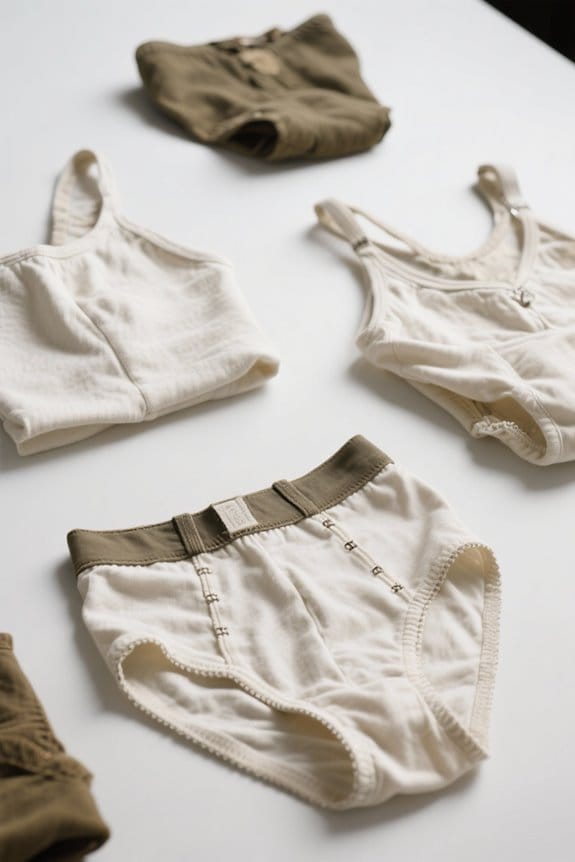
World War Innovations in Underwear Design

Overview: The wars forced removal of metal, prompting lighter supports, cloth fastenings, and washable fabrics for frontline and home use, with explicit examples like soft-cup bras and button closures; Nursing: garments shortened, underbust supports added, and materials prioritized for hygiene and mobility; Aftermath: metals returned, underwires and standardized sizing spread, mass production expanded choices and durable activewear; the reader will find more specific examples and consequences ahead, with practical care tips and sourcing notes included.
Key Takeaways
- Metal rationing during World Wars halted corsetry and drove designs away from steel boning toward lighter, fabric-based support.
- Salvage campaigns and material shortages replaced metal fasteners with buttons, cloth ties, and reinforced stitching for functional closures.
- Innovations like the early bra (Jacob/Warner) and soft-cup designs emphasized comfort, mobility, and activity suitability over rigid shaping.
- Practical wartime needs led to cotton-based, easy-to-wash garments, shorter petticoats, elastic waistbands, and nurse-friendly undergarments for hygiene and movement.
- Post-war return of metals and elastic enabled standardized sizing, underwires, mass production, and greater variety in lingerie styles.
Corset Shortages and the War Effort

You may be interested


The suspension of corset production during World War I was a deliberate government and industry response, driven by metal rationing and military priorities.
Context and topic sentence: Corset history shows that structured undergarments used metal stays and fastenings, making them a clear target for policy, and wartime aesthetics shifted toward simpler silhouettes.
Key facts:
- Major manufacturers, particularly Warner Brothers Corset Company, halted corset manufacturing to comply with rationing, protecting industrial capacity.
- The government framed non-purchase and non-wear as patriotic duties, influencing civilian behavior, consumption, and fashion choices.
- Fact-based consequences included factory retooling, reduced corset availability, and accelerated interest in lighter undergarments.
Practical note: Readers should recognize how policy can rapidly alter production and everyday dress. Historical summaries aid informed design choices.
This shift also paved the way for later innovations emphasizing breathable fabrics and simpler, more functional undergarments.
Metal Salvage for Military Production

Readers should note how metal salvage campaigns, driven by urgent wartime demands for steel, brass, and copper, forced rapid, practical changes in underwear materials, closures, and factory processes.
Overview: The section explains how metal recycling shifted design priorities, removing steel lacing and metal snaps, and prompting fabric innovations like elastic waistbands.
Practical changes: Manufacturers replaced metal fasteners with button closures, cloth ties, and reinforced stitching to preserve function without scarce materials.
Materials: Cotton and wool dominated for durability, preshrinking reduced waste, and later synthetics substituted structural needs.
Consequences: Civilian donations of buttons, buckles, and wires fed war production, reducing civilian access to metal trimmings.
Advice for the reader: Consider how supply priorities influence design choices, and how simple substitutions maintained usability during shortages. Note.
Later developments favored the use of cotton blends and other soft, breathable fabrics to restore comfort and stretch to everyday undergarments.
Early Alternatives: The Move Toward Lighter Support

How did undergarment design shift from heavy corsetry to lighter support garments before and during World War I?
Overview: Innovation impacts were clear, early patents like Tucek’s 1893 design and lightweight tied bras offered relief from rigid corsets, accelerating fashion evolution.
Key developments:
- Early bras: simple halter-like supports, tied at neck, less conforming, reduced metal reliance.
- War measures: metal conservation policies prompted fabric replacements, soft cups, and front-fastening corsets with reduced boning.
- Materials: cotton, unshrinkable wool, elastic and early synthetics allowed flexible shaping, improved mobility.
- Functionality: combinations and camisoles simplified dressing, nursing and workwear adopted lighter pieces.
Consequences: comfort increased, garment diversity grew, and modern lingerie foundations were established. Designers prioritized practicality, preparing women’s wardrobes for postwar styles and manufacturing. Brands also began emphasizing wireless designs to provide everyday comfort without rigid boning.
Mary Phelps Jacob and the Backless Brassiere
Mary Phelps Jacob responded to the move toward lighter support by inventing a backless brassiere in 1913, addressing visible corset rods and the need for softer, low-backed solutions.
Design Details:
- Prototype used two silk handkerchiefs, pink ribbon, cord, and maid sewing, producing a soft, lightweight garment conforming to anatomy.
- Shoulder straps attach to upper and lower corners, wrap-around laces tie at front, enabling low-backed gowns and natural breast separation.
Patent and Impact:
- Patent filed February 12, 1914, granted November 3, 1914, US 1115674A, first garment named “brassiere”.
- Sold to Warner Brothers, commercial growth accelerated during World War I metal conservation, a clear brassiere evolution and modest fashion revolution.
- Design suited varied sizes, allowed activity like tennis, improved comfort, movement.
These innovations foreshadow modern developments in underwear emphasizing breathable fabrics and comfort.
Prewar Underwear: Handcraft and Natural Fibers
Prewar underwear was largely made by hand, using simple tools and locally available fibers, which shaped fit, durability, and everyday care.
- Craft and Methods: Artisans relied on hand sewing techniques, patterns from magazines, and family skills, producing custom fits, repairs, and decorative lace or embroidery.
- Fibers: Common natural materials included cotton for softness, linen for strength and wicking, silk for luxury, and hemp or flax for durability; wool appeared regionally for warmth.
- Production and Economy: Most pieces were home-made or workshop-made, inspected visually, dyed with plant dyes, and sewn on hand-cranked machines where present.
- Consequences: This meant garments lasted longer when repaired, varied by region, and reflected social status through material choice. Repair skills reduced household costs, and patterns guided consistent sizing and longevity.
Modern recommendations emphasize breathable fabrics like 100% cotton for comfort and moisture management.
Wool Innovations and Practical Fabrics
Wool underwent renewed attention for everyday undergarments, as health arguments, fabric treatments, and wartime needs reshaped practical choices and construction. Overview: Officials and makers promoted wool benefits like temperature regulation, odor resistance, and moisture control, while marketing treated “unshrinkable wool” for home laundering. Practical guidance:
- Selection: choose treated wool for easier care, cotton blends for cheaper washing, note fabric durability claims by manufacturers.
- Construction: lighter boning and simpler cuts reduced metal use, garments stressed durability and utility rather than tight shaping.
- Consequences: metal conservation accelerated less restrictive designs, expanding options for active wear and hygiene.
Examples: Ellico unshrinkable wool illustrated scalable production and wartime practicality. Manufacturers documented wash tests, governments endorsed simplified patterns, and suppliers prioritized long lasting, serviceable textiles during. Manufacturers also experimented with moisture-wicking fabrics and padding technologies adapted from sportswear.
New Garments: Combinations, Camisoles, and Knickers
As wartime conservation and practical fabric treatments reduced heavy construction, undergarment design moved toward simpler, multifunctional pieces that favored utility.
Combinations
- Single-piece camisole and drawers, made from longcloth, cambric, nainsook, simplified dressing and reduced laundry, worn with a petticoat for modesty.
- Featured wide frilled legs, embroidery or lace for feminine detail despite austerity.
Camisoles
- Worn under corsets or alone by women who discarded them, made of silk, cotton or ribbed knit, provided warmth, skin protection, and undergarment freedom.
- Served as a middle layer, allowed freer movement.
Knickers
- French and Directoire styles varied in fit, used removable linings for hygiene, shortened with skirts to aid movement and reflect fashion evolution.
- Materials ranged from cotton to silk blends for roles.
Designers favored breathable materials like cotton and blends to improve comfort and breathability.
Nurses, Volunteers, and Functional Undergarments
How did undergarments change to meet the practical needs of nurses and volunteers during wartime service?
Overview
Functional shifts prioritized Comfort Adaptations and Hygiene Practices, using cotton blends, flat buttons, and lighter corsetry to support long shifts.
Key features
- Practical fabrics: cotton for frequent boil washing, breathability, reduced skin irritation.
- Corset redesign: underbust support with limited steel, front-fastening, adjustable lacing for ease.
- Movement and modesty: midriff chemises, knickers, shorter petticoats to allow mobility under shorter skirts.
- Sanitation tools: veils, aprons, sleeve covers to prevent contamination and bodily fluid exposure.
- Utility: flat buttons, sturdy seams, pockets for tools, white colors to signal sterility.
Consequences included improved durability, safer patient contact, and broader acceptance of utilitarian women’s underclothing. Many of these garments were designed to be machine washable to withstand frequent laundering and maintain hygiene.
Impact on Women’s Mobility and Daily Life
Because fabric shortages and workplace demands changed wardrobes, the reader must consider how undergarments affected movement, comfort, and daily routines.
Practical Effects
- Workwear adapted, elastic waistbands and stretch yarns enabled bending, lifting, and long shifts, reducing chafing and fatigue for active tasks.
- Stocking substitutes appeared, leg staining and liquid stockings met visual needs, illustrating fashion improvisation under material scarcity.
Design Consequences
- Corset redesigns and adhesive components increased shoulder and arm mobility, supporting women in manufacturing and service roles.
- Postwar priorities shifted to comfort, allowing shorter hemlines and easier movement, influencing daily living and body autonomy.
Practical Guidance
- Practical choices include stretch blends, reinforced seams, and simple closures suited to repetitive tasks, improving durability and comfort during long shifts.
- Maintain knitted pieces, patch holes, preserve elasticity.
Materials like cotton blends improved breathability and stretch for long shifts.
The Reintroduction of Metal and Bra Sizing
Many manufacturers reintroduced metal fasteners and underwires after WWII, combining them with new stretch fabrics to improve fit, durability, and shape for the wearer. Overview: Postwar designs reused metal closures and underwires to restore structural support, while elastic fabrics compensated for previous shortages. Practical effects: Standardized bra sizing reduced fitting errors, improving sizing accuracy and consumer confidence. Bullet points:
- Design change: metal closures offered adjustable fit, durability, clear adjustment ranges.
- Sizing system: band length plus cup volume became common, enabling repeatable measurements.
- Military influence: reinforced hooks supported prolonged wear, practical for active roles.
- Manufacturing impact: metal availability allowed mass production of consistent sizes, lowering returns.
Consequences include better fit, predictable wear, and foundations for later advancements in lingerie engineering. These changes shaped consumer expectations. Many postwar designs also began incorporating moisture-wicking fabrics to improve comfort and hygiene.
From Utility to Choice: The Growing Lingerie Industry
Following the restoration of metal closures and standardized bra sizing, the lingerie market shifted from utility-driven production toward wider consumer choice, variety, and differentiated value propositions. The industry now expands via clear market trends and shifting consumer preferences, offering function, style, and sustainability.
Key segments:
- Basics and comfort: wire-free bras, bralettes, multifunctional pieces for daily wear.
- Active and athleisure: sports bras, performance fabrics, technical fits for exercise.
- Inclusive and gender-neutral: extended sizes, unisex styles, broader fit systems.
Drivers and tools:
- Technology: virtual fitting, digital tailoring, reduced returns.
- Sustainability: eco fabrics, ESG practices, responsible sourcing.
The reader should compare regional growth, prioritize fit technology, and anticipate demand for comfort-led innovation. Plan product lines to match local demographics.
Frequently Asked Questions
Did Men’s Underwear Evolve During the Same Period?
Yes, men’s underwear evolved during the same period. Observers note boxer shorts emerged alongside briefs and two-piece styles, driven by military influences, material shortages, technological advances, and shifting consumer preferences in global postwar markets rapidly.
Were There Patent Disputes Over Early Bra Designs?
Like a budding storm, yes — historians note that bra patents sparked design controversies, with overlapping claims, failed filings, and occasional court cases; inventors often lacked resources, but persistent disputes remained limited yet historically consequential
How Did Underwear Changes Affect Fashion Advertising and Photography?
Underwear changes transformed visual narratives, prompting photographers and marketers to emphasize functionality, fit, and everyday lifestyle; this accelerated fashion evolution and amplified advertising impact through technical close-ups, demographic targeting, and patriotic or utilitarian imagery stylings
Did Religious or Cultural Groups Oppose Bra Adoption?
Yes, some religious and cultural groups opposed bra adoption, citing modesty, gender roles, and concerns about bra symbolism; their resistance reflected broader cultural perceptions about femininity, morality, and appropriate public presentation during social change periods.
Which Other Countries Innovated Undergarments During World War I?
Germany, France, Britain and the United States led innovations: French Innovations emphasized wool blends and moisture management, British Adaptations focused on practicality from captured samples, while United States advanced bra design and elastic, stretchable fabrics.