As an Amazon Associate, we earn from qualifying purchases. Some links on this site are affiliate links at no extra cost to you. Our recommendations are based on thorough research and editorial judgment.


Japanese Traditional Undergarments Vs Modern Styles

Overview: The reader should note that Japanese traditional undergarments used linen, silk, and cotton, offering simple wraps and ties for function and ritual. Male: Fundoshi varieties (rokushaku, etchū, mokko) provide thong or apron styles, breathable but less shaping. Female: Kosode, juban, and koshimaki served as layered waist and torso garments for modesty and insulation. Modern: Western panties and briefs use elastic blends, moisture-wicking fabrics, and focus on fit and hygiene, in detail shortly.
Key Takeaways
- Traditional garments (fundoshi, kosode, koshimaki) used linen, silk, and cotton; modern styles favor cotton blends and synthetic moisture-wicking fabrics.
- Male fundoshi variations (rokushaku, etchū, mokko) differ by size and tying method, versus modern briefs and boxers prioritizing coverage and convenience.
- Heian kosode evolved from inner wear to outer kimono layers, while modern women’s underwear mirrors Western T-shirt–style juban and panties.
- Wartime practicality and postwar social change drove rapid adoption of Western drawers, panties, and monpe-compatible undergarments.
- Contemporary revival of fundoshi and silk designs blends tradition with fashion, festival use, and small-scale artisanal production.
Historical Origins and Evolution of Japanese Undergarments
You may be interested


Although rooted in very old practices, the history of Japanese undergarments can be read as a series of practical adaptations to materials, class, and changing fashions, and the reader should focus on clear timelines and key examples to understand that evolution.
Historical overview
- Origins: fundoshi appears in Nihon Shoki, haniwa show use, linen then cotton, silk for wealthier people.
- Heian changes: kosode started as plain white silk undergarment, small sleeves, worn by nobles, later by women.
- Edo period: nagajuban added for hygiene, han-eri collars denote upper class, cotton for lower classes.
Implications
- Social influence and historical context shaped materials, visibility, and later Western shift, affecting daily comfort and festival use.
- Consequence: tradition preserved in ceremonies, practical changes altered dress.
Many traditional garments evolved with the adoption of cotton blends, which provided breathable, comfortable, and affordable alternatives to silk.
Traditional Male Styles: Fundoshi Varieties and Construction

The fundoshi, a traditional Japanese male undergarment, appears in several distinct forms, each defined by size, tying method, and typical use. Practical notes follow, explaining varieties, measurements, and wearing steps. Types:
- Rokushaku: about 100 cm by 34 cm, thong-style, draped and knotted, used historically across classes.
- Etchū: same size with apron-like front, held by a waist band, valued for absorbent wrap.
- Mokko: 70 cm by 34 cm, side-tied, simpler, two forms include T-mokko.
Materials and construction:
- Fundoshi materials include linen, cotton, silk crepe, occasionally satin, unlined or winter-lined.
- Fundoshi construction varies by length, panel shape, and tying method, affecting comfort and coverage.
White was traditional, modern colors and prints exist. Mokko and etchū are practical for festivals, swimming, and performance. Grip often differs. Modern supportive designs often use blends like 95% cotton with spandex to provide breathable comfort and stretch.
Recommended Products
![Edoten] Fundoshi Made in Japan 100% Cotton loincloth Comfortable Underwear Starry Sky(NavyBt)](https://m.media-amazon.com/images/I/41OJ04Wb8wL._SL500_.jpg)
Japanese classic pants.Fashion under wraps is what defines a true trendsetter. Try out the Etchu Fundoshi (loincloth). You will only find this design at Edoten. It is our original Fundoshi design.
![Edoten] Fundoshi made in Japan 100% Cotton loincloth comfortable underwear Dragon(NavyBt)](https://m.media-amazon.com/images/I/418ggIkGRfL._SL500_.jpg)
Japanese classic pants.Fashion under wraps is what defines a true trendsetter. Try out the Etchu Fundoshi (loincloth). You will only find this design at Edoten. It is our original Fundoshi design.
![Edoten] Fundoshi made in Japan 100% Cotton loincloth comfortable underwear Cherry Blossoms(NavyBt)](https://m.media-amazon.com/images/I/41IuqefHGWL._SL500_.jpg)
Japanese classic pants.Fashion under wraps is what defines a true trendsetter. Try out the Etchu Fundoshi (loincloth). You will only find this design at Edoten. It is our original Fundoshi design.
Traditional Female Systems: Kosode, Juban, and Koshimaki
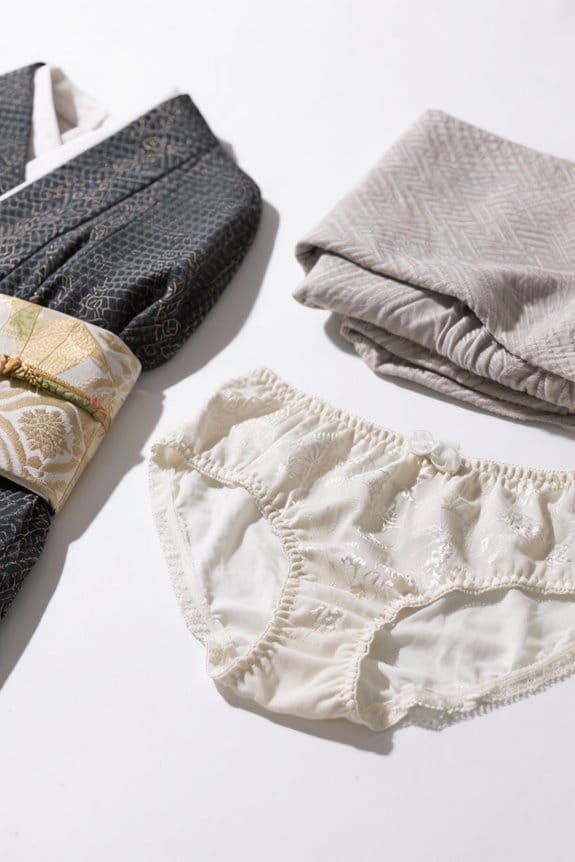
– Kosode: originally an inner layer for Heian aristocracy, later adopted as outerwear during the Kamakura era, and consequently often became more decorative and less sculpted in sleeve shape; when worn as outer clothing it replaced some layered hitoe garments, which affected how inner garments had to be redesigned to preserve modesty and fit.
Overview
- Kosode variations evolved from plain white underlayers to patterned outerwear, altering cut and ornamentation.
- Juban styles arose to replace kosode as underwear, functioning like a modern white T-shirt, and later becoming nagojuban for formal wear.
- Koshimaki served as simple waist wrap underwear, common until the 1930s, practical but not like Western briefs.
- Consequences: changing outer kosode required new juban designs for modesty, and koshimaki decline shifted everyday undergarment choices significantly.
Modern adaptations have also incorporated moisture-wicking materials and supportive design elements from athletic underwear for improved comfort.
Shift to Western-Style Underwear After 1939 and Postwar Changes
As wartime needs changed, many Japanese women shifted from traditional koshimaki and layered kimono undergarments to Western-style drawers and panties for practical reasons such as mobility and compatibility with monpe.
Key wartime shifts:
- Monpe adoption made koshimaki impractical, prompting rapid introduction of drawers and panties, increasing mobility, and simplifying dressing.
- Government promotion of monpe accelerated change, creating functional dress norms and practical expectations.
Postwar effects and policy:
- Early occupation-era use by prostitutes produced underwear stigma, slowing general acceptance until mid-1950s.
- Economic recovery, public campaigns, and cultural adaptation reframed Western underwear as modern, respectable, and widely adopted by late 1950s.
- Consequences included new retail markets, education on proper fit and concealment, and changing gender norms in urban and rural areas, over decades norms stabilized.
Antibacterial and moisture-wicking fabrics also offered long-lasting freshness and reduced irritation.
Recommended Products

Material: milk silk, modal fabric; make you comfortable in summer

Cute japanese lolita bikini panties for womens,made of 95% polyester and 5% spandex,skin friendly,breathable,soft and comfortable.
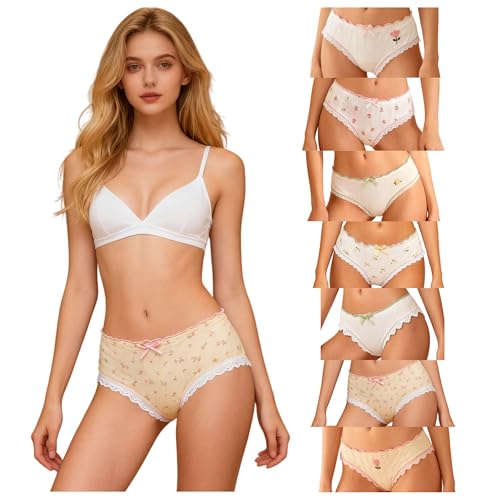
【High quality fabrics】double-layer 100% cotton crotch, and reinforced stitches. This women's brief is extra soft, durable, hygienic, breathable, skin-friendly, moisture-wicking, smooth, lightweight, and sweat wicking. It keeps your intimate areas refreshing and healthy. For your all-fay comfort, this exquisite panty is suitable for sportswear, also with low-cut jeans, pants, dresses and etc..
Modern Revival: Female Fundoshi, Contemporary Production, and Demand
Overview: this section explains the modern revival of female fundoshi, covering production, demand, and practical use in everyday contexts.
- Summary: The revival began in early 2000s with brands like Wacoal and FFsee, promoting fundoshi fashion and stress reduction.
- Production: Modern pieces use silk satin, ribbons for tying, multiple sizes, localized craftsmanship in Japan.
- Demand: Interest grows due to comfort benefits, breathability, sleepwear use, online marketplaces like Etsy and Aifun.
- Branding: Playful names, social media outreach, collaborations broaden appeal.
- Practical notes: Recommended for nighttime wear, reduces sweat odors, available as lingerie or luxury items.
- Consequences: Wider adoption raises younger awareness, supports artisanal producers, and sustains a niche market. Demand may continue to grow with comfort-focused campaigns and targeted online retail strategies. This trend remains measurable.
They are often marketed alongside mainstream cotton underwear that emphasizes moisture-wicking properties to appeal to comfort-focused consumers.
Cultural Significance: Festivals, National Clothing Status, and Preservation
Cultural continuity guides understanding of fundoshi today, linking festival practice, national clothing debates, and preservation efforts across Japan. Overview: The reader learns festival significance and cultural identity through clear facts, examples, and outcomes. Festivals and rituals: – Hadaka Matsuri, Saidaiji Eyo, and Sanja Matsuri feature fundoshi, mikoshi carriers, and purification rites. – Participants seek shingi, renew spiritual ties, and reinforce community bonds. National status and decline: – Daily use fell after World War II, shifting fundoshi to ceremonial roles, affecting craft knowledge and clothing markets. Preservation actions: – Japan Fundoshi Association promotes education, media campaigns, and youth engagement, which can revive skills, boost tourism, and broaden international interest. – Consequences include loss of technique, but also opportunity for niche businesses and cultural tourism growth. Some modern preservation projects also consider providing performers with soft, breathable materials to improve comfort during festivals.
Frequently Asked Questions
Are Fundoshi and Juban Available in Standardized Sizes for Modern Buyers?
Yes; they are sold in standardized sizes, though modern fundoshi and juban also offer custom sizing and account for fit variations across brands, fabrics, and gendered models to accommodate contemporary consumer preferences and sizing guides.
How Should Traditional Undergarments Be Laundered to Preserve Fabric and Dye?
Coincidentally, one should hand wash traditional undergarments in cold or lukewarm water with a mild detergent, avoid bleach and softeners, gently press dry, shade-dry flat, and store aired to guarantee fabric care and dye preservation.
Can Pregnant or Postpartum Women Safely Wear Traditional Undergarments?
Yes, pregnant and postpartum women can safely wear traditional undergarments adapted to changing bodies; comfort levels depend on tailoring, wraps and appropriate fabric choices such as soft natural fibers to minimize excess pressure and irritation.
Are There Regulations or Social Norms About Wearing Fundoshi in Public Today?
Yes, there are no explicit national bans; fundoshi acceptance depends on public norms, permitted during festivals and events, tolerated informally, but outside ceremonial contexts wearers may face social disapproval or possible indecency enforcement in practice.
Where Can International Buyers Legally Purchase Authentic Traditional Undergarments?
They can legally purchase authentic traditional undergarments from online retailers like Shimazakura, Kimono Yukata Market Sakura, Japan Objects Store, Taiko Center, and Kimonoya, as well as traditional markets and certified shops in Japan for authentication.