As an Amazon Associate, we earn from qualifying purchases. Some links on this site are affiliate links at no extra cost to you. Our recommendations are based on thorough research and editorial judgment.

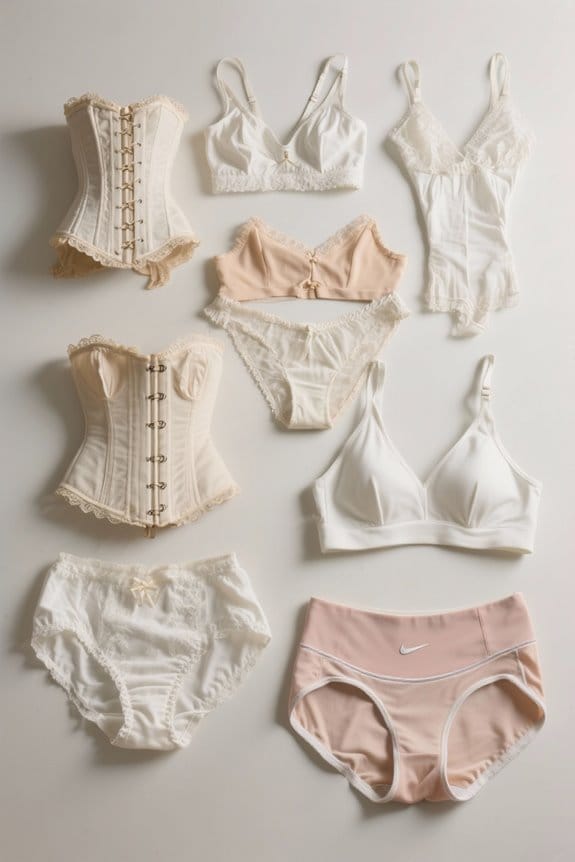
How Women’s Liberation Changed Underwear Design

Overview: Women’s liberation transformed underwear from restrictive corsets to practical pieces, improving mobility and health for the reader. Reforms promoted bloomers and union suits, reduced breathing restriction and circulatory strain, and eased laundering burdens. Innovation: Brassieres, nylon, and spandex enabled lighter, supportive designs, broader sizing, and athletic styles. Outcome: Modern lingerie emphasizes comfort, inclusivity, sustainability, and consumer choice. Examples include union suits, bloomers, wartime ration adaptations and bras. Additional historical details follow for further context.
Key Takeaways
- Movements against corsetry led to lighter, less restrictive undergarments prioritizing breathing and mobility.
- Practical garments like bloomers and union suits normalized functional, gender-neutral underwear for active public life.
- Brassieres replaced corsets, offering targeted support and enabling streamlined silhouettes aligned with changing fashion.
- Introduction of synthetics and elastics in mid-20th century allowed stretch, comfort, and fitted everyday lingerie.
- Modern liberation emphasizes inclusive sizing, comfortable materials, sustainable production, and multifunctional designs.
Early Dress Reform and the End of the Corset
You may be interested


Although reform began as a practical response to health and movement problems, the dress reform movement quickly linked clothing changes to wider social goals.
Origins and Aims
- Reformers promoted the bloomer costume, loose knee-length dresses over Turkish-style trousers, offering mobility and modesty from tight bodices.
- Early leaders like Elizabeth Cady Stanton, Amelia Bloomer, and Elizabeth Smith Miller modeled this fashion rebellion, facing ridicule but gaining attention.
Health Critiques and Alternatives
- Medical critics documented corset harm, recommending corset alternatives and lighter undergarments to prevent deformation and breathing restriction.
- Practical designs, such as knitted single-piece garments and gathered bodices, reduced bulk, enabled activity, and encouraged gradual social change.
- Consequences included improved mobility, lower illness rates, and expanded public roles for women over time, nationwide adoption.
Modern reformers also emphasized the importance of breathable fabrics in undergarments to improve comfort and health.
The Union Suit as a Symbol of Emancipation

A reader can see how dress reform moved from loose outer garments to undergarments that changed women’s daily mobility and health. The union suit emerged as an emancipation garment and practical tool, combining shirt and trousers into one warm, ankle-length piece. Design and Purpose:
- Patented 1868, knit flannel, removed stockings and garters, reduced compression.
- 1875 Susan Taylor Converse update added gathered bodice, buttons at waist and hips, supported skirts.
Health and Activism:
- Medical advocates linked suit to reduced respiratory and circulatory strain.
- Mary Walker’s advocacy showed radical innovation in dress as protest.
Adoption and Impact:
- Industry improvements, silk-plating, and advertising broadened use across genders.
- Offered practical warmth, eased movement, reduced laundry time, and normalized alternative clothing for public life and equality. Modern base layers often include moisture-wicking fabrics to help manage sweat and maintain warmth.
Bloomers and the Rise of Practical Undergarments
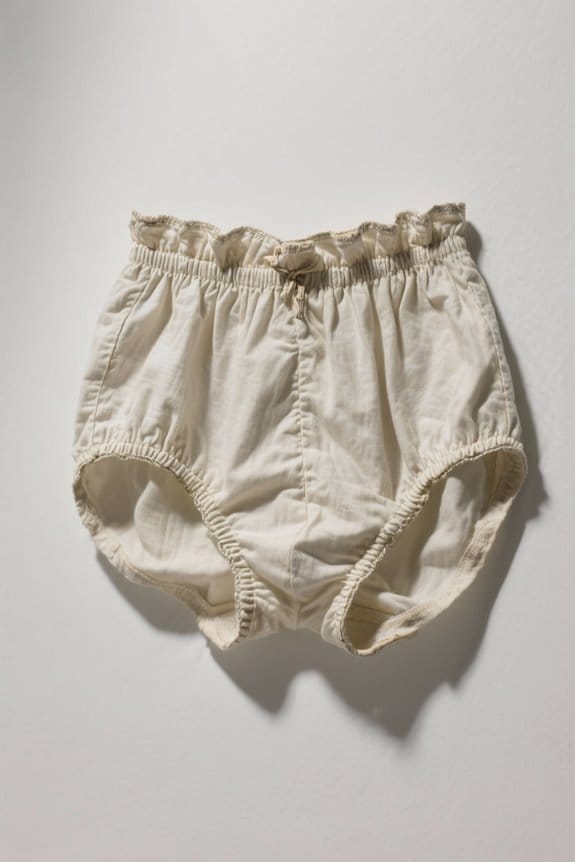
Often, the introduction of bloomers in the 1840s marked a deliberate shift toward practical undergarments that improved mobility and reduced health risks from restrictive Victorian dress.
Design and Function: Bloomers were knee-length, loose, bifurcated garments, gathered at the ankle, intended to replace heavy skirts and reduce physical strain.
- Mobility: allowed walking, work, outdoor activity, laundering ease, and less heat buildup.
- Health consequences: reduced fainting, skin problems, and musculoskeletal strain.
Symbolism and Impact: The bloomer phenomenon linked to suffragists and dress reform, creating a clear bloomers legacy within feminist fashion movements.
- Social reaction: ridicule, protests, and gradual acceptance led to later practical underwear.
- Modern echoes: athletic wear and short ruffled styles trace design lineage.
This illustrates how practicality informed later underwear design choices and norms. Later underwear designs emphasized high-rise designs and moisture-wicking technology for improved comfort and support.
Brassieres, Nylon, and Early 20th-Century Innovations
Several key innovations between World War I and the 1950s transformed undergarments from rigid support structures into lighter, more flexible garments that matched changing fashions and roles. Overview: the brassiere emerged as a mass-market replacement for heavy corsetry around 1917, early designs flattened and minimized curves for the 1920s flapper look, and mid-century advances in synthetics—nylon, latex yarns, polyester, and later elastane—enabled stretch, durability, and smoother fits.
Brassiere evolution
- Early bras limited curves, created straight silhouettes, and replaced corsets, increasing movement and comfort for tasks.
- Small two-piece items emerged later, gradually.
Materials and effects
- Nylon fabric and latex yarns offered lighter, durable garments, smoother fits, and enabled stretch underwear.
- Postwar synthetics shifted design toward fitted lingerie that balanced support and mobility.
Many modern designs also incorporate cotton-spandex blends to combine breathability and stretch for everyday comfort.
Suffrage, Work, and the Political Shifts in Underwear Design
Political shifts around suffrage reshaped undergarment design, connecting dress reform, workwear needs, and the rising use of lighter bras and synthetics. Context and drivers: Reformers and workers pushed alternatives to corsets, with union suits and bloomers offering health and mobility benefits linked to suffrage activism and public work roles. Practical outcomes: New garments reduced layers, allowed factory labor and voting activities, and used materials like cotton and later synthetics for comfort and durability. Examples: the emancipation union suit, bloomers championed by Amelia Bloomer, and wartime bra issuance demonstrate functional shifts and undergarment symbolism tied to civic roles. Consequences: Increased movement enabled political participation, altered manufacturing, and normalized less restrictive silhouettes in daily life. These changes influenced design standards, retail offerings, and garment care practices. Later developments included the use of cotton and spandex blends to improve comfort and stretch.
Modern Lingerie: Comfort, Inclusivity, and Choice
Because modern lingerie must meet varied daily needs, designers prioritize comfort, inclusivity, and adaptability in materials, fit, and styling.
Comfort and Materials
– Soft, breathable fabrics, natural fibers with stretch, thermo-regulating textiles, smart construction for all-day support.
Inclusivity and Color
– Broad size ranges, body positivity focus, bold and neutral palettes, seasonal tones for varied skin tones.
Versatility and Styling
– Multi-use pieces: bralettes, bodysuits, longline bralettes doubling as outerwear, corsetry used for power dressing.
Sustainability and Tech
– Sustainable practices, AI-driven fit, 3D design, magnetic fasteners, reduced waste production methods.
Consequences: better daily wearability, fewer fittings, longer garment lifecycle, clearer consumer choice, and more confident self-presentation.
Practical tips: measure regularly, choose stretch fabrics, prioritize breathable blends, and prefer repair-friendly construction when possible too.
Many brands now offer reusable absorbent underwear with odor guard technology for sustainable, leak-proof protection.
Frequently Asked Questions
How Did Non-Western Cultures Influence Western Underwear Reforms?
Entire wardrobes supposedly melted as non-Western garments reshaped Western underwear: scholars note Cultural exchange and Global trends introduced simpler, supportive, multifunctional designs blending dudou, loincloth and strophium influences, easing restrictions and prioritizing comfort, liberation gains
What Were the Environmental Impacts of New Lingerie Materials Like Nylon?
Nylon lingerie caused significant ecological concerns: high fossil fuel dependence, energy intensive polymerization, N2O emissions, water use, non biodegradable persistence and microfiber shedding; prompting interest in sustainable materials and closed loop recycling despite implementation challenges.
How Did Labor Conditions in Factories Shape Underwear Production and Design?
By 1918 about 30% of industrial workers were women. Manufacturers prioritized comfort, simpler one‑piece garments and knit fabrics to enable movement, influenced by worker rights campaigns and factory safety concerns, increasing mass‑production efficiency and health.
What Role Did Advertising and Media Play in Popularizing New Underwear Styles?
Advertising evolution and media portrayal accelerated adoption by presenting reform underwear as practical, modern, and emancipatory; campaigns, exhibitions, wartime framing, and celebrity endorsements normalized bras and comfort, shaping consumer demand and design innovation industry practices
How Have Transgender and Nonbinary People Influenced Modern Underwear Design?
Over 50% of major campaigns now feature diverse gender identities; transgender and nonbinary people have driven inclusive sizing, specialized tucking and compression garments, and the rise of gender neutral designs across mainstream underwear lines today.