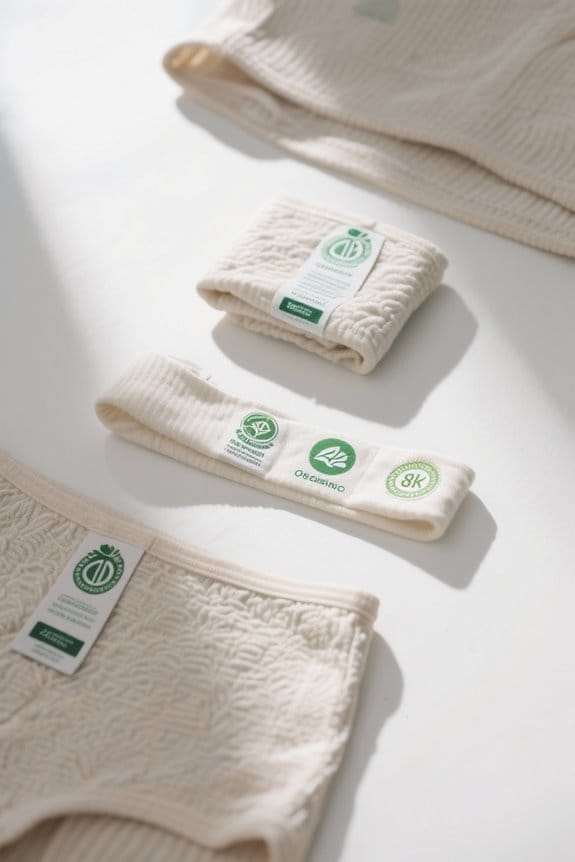
As an Amazon Associate, we earn from qualifying purchases. Some links on this site are affiliate links at no extra cost to you. Our recommendations are based on thorough research and editorial judgment.


Water Usage in Cotton Vs Bamboo Production

Overview: The reader sees that cotton usually needs far more water than bamboo, with cotton global footprints commonly 2,745–8,927 L/kg, bamboo typically much lower, but long‑term comparisons are limited. Regional Notes: Brazil and rainfed areas are low, Uzbekistan extreme, the U.S. varies. Practices: Use drip, sensors, deficit irrigation to cut 20–50%, demand supplier water data, consider processing chemical impacts, choose certified suppliers. More specifics appear later if the reader continues for guidance and sourcing options.
Key Takeaways
- Cotton’s water footprint varies widely—about 2,745–8,927 m³/ton globally, with hotspots (e.g., Uzbekistan) approaching 20,000 L/kg.
- Approximately 75% of cotton’s water footprint is rainwater; over half of global cotton is rainfed, reducing irrigation dependency.
- Bamboo generally requires less irrigation and fewer agrochemicals than cotton, though long-term comparative water data are limited.
- Precision irrigation—drip, subsurface, sensors—can cut cotton water use 20–50% while improving efficiency and yields.
- Prioritize fibers from low-irrigation regions, require supplier water reporting, and fund farmer training to scale sustainable water practices.
Global Water Footprint of Cotton
You may be interested


The reader should note that cotton production uses large volumes of water, requiring careful interpretation of rainfall versus irrigation contributions, and regional variation. Global totals: – Cotton uses about 226.4 trillion litres annually, producing 25.38 million tonnes, with 44% of areas irrigated. Water components: – Green (rainfall) averages 6,582 L/kg, blue (irrigation) 2,346 L/kg, contributing 35%–75% and 25%–65% respectively, influencing cotton water footprints from 2,745 to 8,927 m³/ton. Regional notes: – Irrigation dominates in some basins, yields vary, and efficiency gains like precision irrigation reduce blue demand. Implications: – Though water intensive per unit, cotton accounts for about 2.76% of agricultural irrigation, affecting agricultural impact assessments and policy choices. Practical advice: – Monitor soil moisture, adopt sensors, improve scheduling, reduce irrigation where water limits. Bamboo underwear often contains 95% bamboo viscose, providing notable softness, breathability and moisture-wicking performance.
Known Data Gaps for Bamboo Water Use
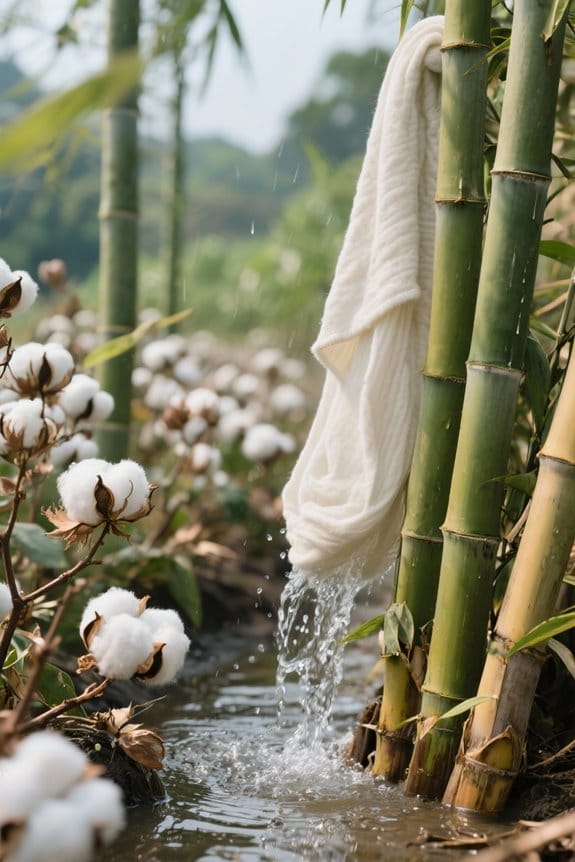
Uncertainty about bamboo water use stems from species differences, measurement limits, and short study durations, which hinder reliable scaling.
Key gaps: Species-specific sap flux, long-term budgets, and management effects are underreported, limiting water monitoring and model inputs.
Measurement needs: In situ species calibration for TDPs, wider use of SHB, standardized protocols for cross-species comparison, and routine soil moisture profiling.
Research priorities: Expand species sampling, collect seasonal and annual WUE, quantify thinning and harvest impacts, and establish long-term plots under drought scenarios.
Practical consequences: Without these data, estimates of evapotranspiration and water budgets remain uncertain, risking poor management decisions, misallocated irrigation, and flawed comparisons to crops like cotton.
Immediate steps: Fund multi-year monitoring, train technicians in species calibration, and publish open water monitoring datasets widely.
Adaptive underwear often uses soft, breathable materials, which highlights how material properties can be relevant when comparing resource inputs across fiber types.
Regional Differences in Cotton Water Consumption
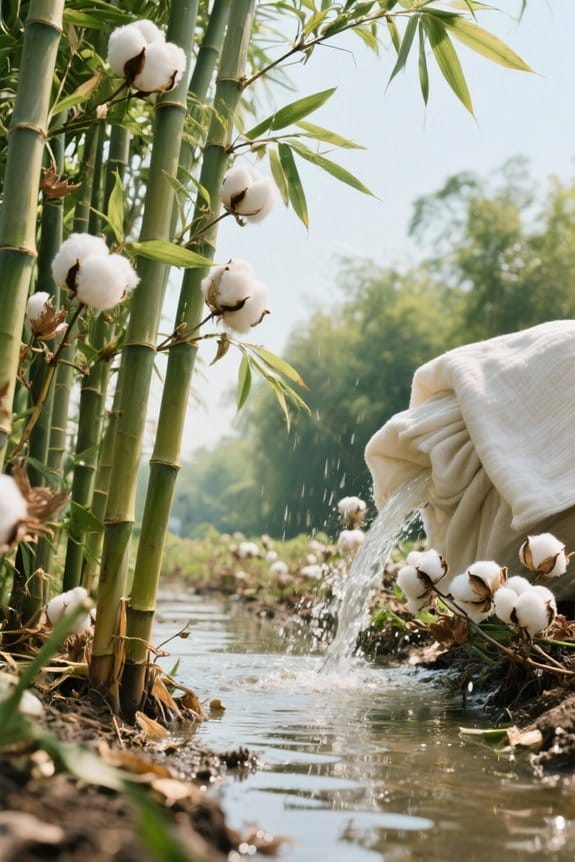
Given the data gaps in bamboo water use, regional cotton water consumption patterns provide a clearer, better-documented contrast for water managers and planners. Overview: Regional water differences in cotton production are large, and they guide planning, allocation, and risk assessment for water managers. Key regional examples:
- Brazil: low total footprint (3,436 litres/kg), mostly rainfed, minimal irrigation.
- United States: Southeast low irrigation use (234 l/kg), West high irrigation (3,272 l/kg).
- Central Asia: extreme overuse (Uzbekistan ~20,000 l/kg), heavy river dependence.
- Asia-Pacific: variable intensities across India, China, Pakistan, and Egypt.
Consequences include stressed rivers, policy needs, and site-specific efficiency measures. Regional data sets enable prioritized interventions matching local climate and infrastructure realities, improving allocations and long-term sustainability. This supports measurable water targets. Many brands emphasize organic cotton for comfort and sustainability.
Irrigation Versus Rainfall: Cotton Insights
Overview: readers should distinguish rainfed from irrigated cotton, since each pathway changes water use, yield, and management risks. Cotton often uses more rainwater than irrigation, with rain comprising about 75% of the global water footprint, and rainfed systems cover over half of production. Practical contrasts:
- Rainfed — lower managed withdrawals, variable yield, suited to sustainable practices where climate allows.
- Supplemental irrigation — boosts yields, can increase production by up to 400% in some cases, requires water infrastructure.
- Full irrigation — higher control, needs careful irrigation efficiency and resource planning to avoid aquifer depletion.
Regional examples show wide water use ranges, so choices affect local sustainability and risk. Examples include regions where 64% of U.S. cotton is rainfed, while western farms may use thousands of litres per kilogram. Choosing organic cotton can reduce pesticide use and often lowers overall water and environmental impacts compared with conventional cotton.
Water Efficiency and Technology in Cotton Farming
Several practical technologies and management steps improve cotton water efficiency, and this section explains key tools, measurable benefits, and common trade-offs for farm managers. Key Technologies: Precision irrigation examples include VARIwise, GoField®, drip and subsurface drip, and variable rate irrigation, these reduce water use and support yield optimization. Measured Benefits: Water use can drop 20–50% with drip, VARIwise adds ~10% WUE and 5% yield, long term shifts cut irrigation by about 38–40% while yields rose 50%. Adoption Considerations: Upfront costs, sensor compatibility, and need for training limit uptake, industry support can ease barriers. Data Practices: Soil moisture sensors, satellite imagery, and scheduling models guide timing, reduce overwatering, and improve resource allocation. Farmers should weigh costs, benefits, and local water availability when choosing systems carefully. Adoption of technologies such as drip irrigation can significantly reduce water use on farms.
Environmental Impacts on Water Quality and Basins
Many cotton and bamboo production choices directly affect local water quality, groundwater levels, and the health of nearby aquatic ecosystems. Key impacts:
- Cotton often causes chemical runoff from pesticides and fertilizers, contaminating rivers and wells, reducing natural filtration methods, and harming aquatic life.
- Bamboo avoids pesticides, so runoff is minimal, allowing sediments and vegetation to support natural filtration methods and basin recharge.
Consequences:
- Contaminated water leads to reduced biodiversity, fish declines, and long-term soil degradation in basins with heavy cotton irrigation.
- Bamboo cultivation supports biodiversity protection by preserving water quality and lowering basin stress.
Actions for managers:
– Implement buffer zones, improve filtration methods, and monitor groundwater to protect basin function and ecosystem health. Policy changes and farmer training can reduce harm and improve outcomes. Additionally, bamboo cultivation often requires less water and fewer pesticides than cotton, reducing environmental impacts.
Comparing Cotton and Bamboo: What We Know and Don’t Know
Building on the previous examination of water quality and basin effects, managers and practitioners need a clear comparison of cotton and bamboo water use.
Summary: Cotton requires about 2,700 liters per t-shirt, bamboo 200–300 liters, showing large water savings in many scenarios. Bamboo sustainability rests on rainfall-fed growth and high fiber yield, cotton alternatives must consider irrigation and chemical inputs.
Knowns and Unknowns
- Known: Bamboo often needs minimal irrigation, yields more fiber per acre, reduces basin stress.
- Known: Cotton depends on irrigation, uses pesticides and fertilizers, can deplete aquifers.
- Unknown: Regional variance in water savings, processing water for bamboo, long-term data.
- Unknown: Comparative data for organic cotton versus bamboo, and real-world lifecycle figures.
This summary guides practical choices, while highlighting research gaps to address.
OEKO-TEX Standard 100 certified textiles indicate products have been tested for harmful substances, reducing chemical-related risks that can be relevant when considering material processing impacts.
Recommendations for Water‑Smart Fiber Choices
Although water footprints differ widely, managers and practitioners can choose fiber sources and practices that reduce basin stress, conserve irrigation supplies, and limit pollution. Assessment steps: Evaluate regional rainfall, irrigation intensity, and groundwater risk, prioritize fibers grown with rainfeed or minimal irrigation like bamboo, consider fiber alternatives for high stress basins. On-farm actions: Adopt moisture sensors, LEPA, drip systems, deficit irrigation where safe, monitor yields to avoid yield loss. Supply-chain measures: Source from regions with low irrigation footprints, require water reporting, support certification and sustainable practices. Trade-offs and outcomes: Choosing bamboo reduces irrigation needs, cotton can improve water efficiency with technology, wrong choices can deplete aquifers and pollute watersheds. Monitor metrics, compare footprints, update sourcing policies, fund farmer training to secure resilient futures now. Adopting sustainable fibers such as bamboo viscose can lower irrigation demand and enhance biodegradability.
Frequently Asked Questions
How Much Water Is Used to Process Cotton Into Finished Fabric and Clothing?
Cotton processing consumes roughly 100–150 liters per kilogram fiber, and fabric production stages (bleaching, dyeing, printing, finishing) raise water use so a T-shirt can typically require approximately 2,700 liters and jeans up to 10,000 liters.
What Is the Water Footprint of Recycled or Reclaimed Cotton Fibers?
Recycled cotton’s water footprint is drastically lower—up to 95% less than virgin cotton—because recycling processes avoid irrigation. It still uses water in processing, but significant water conservation occurs through reuse, low-water dyes, and facility recycling.
How Does Consumer Washing and Care Affect the Overall Water Footprint of Fibers?
Consumer washing, care strongly alter a fiber’s lifetime water footprint; consumer habits and care techniques, such as less frequent washes, cold cycles, full loads, air drying and durable garments, reduce water use, pollution and replacements.
What Policy or Economic Incentives Exist to Reduce Water Use in Fiber Supply Chains?
Governments and brands deploy regulations, subsidies, certification and market incentives to promote water conservation and sustainable practices across fiber supply chains, offering grants, tax breaks, standards, labeling, lender preferences and procurement rewards for compliant suppliers.
How Does Converting Land to Bamboo Plantations Affect Local Watershed Hydrology?
Where streams once dwindled, land conversion to bamboo increases storage and raises groundwater, watershed impact includes enhanced recharge, reduced sediment, altered evapotranspiration, improved riparian stability, moderating floods and sustaining baseflow for dry periods and resilience.