As an Amazon Associate, we earn from qualifying purchases. Some links on this site are affiliate links at no extra cost to you. Our recommendations are based on thorough research and editorial judgment.

Understanding Certifications for Eco-Friendly Underwear

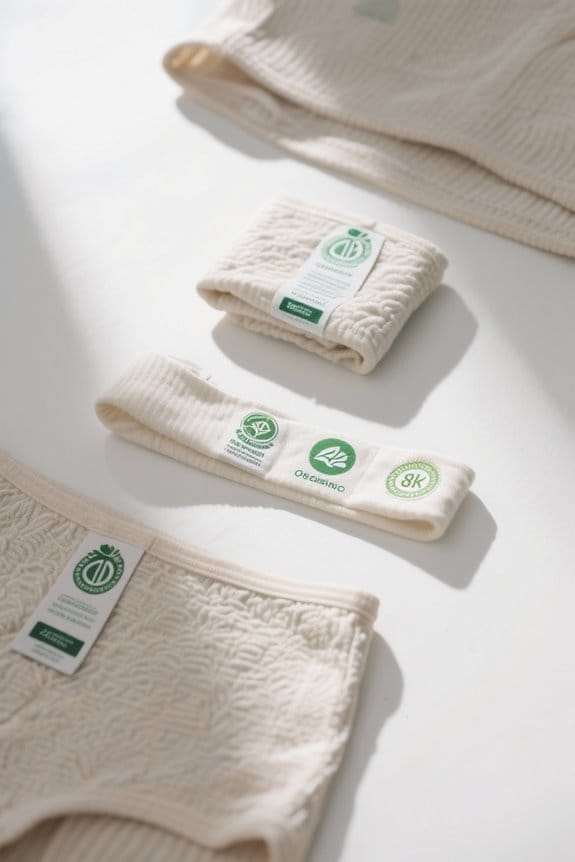
The guide explains key certifications for eco-friendly underwear: GOTS: verifies organic fibers (≥95% for label), bans toxic chemicals, enforces labor standards; OEKO‑TEX STANDARD 100: tests finished garments for harmful substances, stricter for intimates; Social/ethical: Fair Trade, Fair Wear, B Corp guarantee wages and safety. It lists material impacts, health benefits like less skin irritation, verification steps such as QR checks and audits, and trade-offs like higher cost—continue for practical buying steps and size inclusivity guidance.
Key Takeaways
- GOTS certifies organic-fiber content, bans hazardous chemicals, and enforces social standards across the supply chain.
- OEKO‑TEX STANDARD 100 tests finished garments and components for over 1,000 harmful substances, with stricter limits for underwear.
- Social and ethical labels (Fair Trade, Fair Wear, B Corp) verify fair wages, safe workplaces, and anti‑forced‑labor practices.
- Certified underwear reduces exposure to irritants, improves breathability, and lowers risks of skin irritation and infection.
- Verify claims via QR codes, certification numbers, supplier lists, and independent audit reports before trusting eco-labels.
What GOTS Certification Means for Underwear
You may be interested


Because underwear touches the skin, the reader should know what GOTS certification guarantees about materials, production, and worker conditions.
Key guarantees:
- Materials: minimum 95% organic fibers for “organic” label, separation from conventional fibers, approved accessories, GOTS impact includes banned hazardous chemicals.
- Production: chemical inputs must be on positive list, low-impact dyes, hydrogen peroxide bleaching, functioning wastewater treatment in factories.
- Worker conditions: ILO standards enforced, no child or forced labor, fair wages, social compliance systems and independent audits.
Practical outcomes:
– Organic benefits: reduced toxic residues, traceability from field to product, durability tests, independent certification gives consumer assurance.
Example: underwear labeled GOTS organic likely avoids phthalates and PVC, so sensitive skin irritation is less likely, and brands must document cotton sourcing. Certification is independently verified regularly. Many reputable underwear options also use 95% organic cotton blended with elastane for stretch.
Understanding OEKO‑TEX STANDARD 100 and Skin Safety

Although OEKO‑TEX STANDARD 100 focuses on textile safety, it also gives concrete protections for skin‑contact garments like underwear. The label certifies fabrics and all accessories, against over 1,000 harmful substances, applying stricter limits for intimate wear, and aligning with REACH and related lists. Certification process: application, sample testing, company quality assurance, and on‑site audits, repeated annually or every three years. Skin safety specifics: limits for allergens and irritants, testing of buttons and prints, allowance for certified recycled inputs, and periodic updates to lists. Practical consequences include verified labels with QR codes, one‑year validity requiring renewal, and modular cost benefits when components are pre‑certified. This guarantees reliable human‑ecological protection for sensitive skin. Consumers can verify authenticity using certificate numbers or QR codes online for reassurance. Moisture-wicking fabrics keep wearers cool and dry, minimizing sweat and odor for enhanced comfort.
Social and Ethical Certifications to Look For

Which certifications should a buyer check when choosing socially responsible underwear, and what do they actually guarantee?
Worker rights certifications
- Fair Trade: guarantees fair wages, safe working conditions, transparent supply chains, and community development funds; examples include KNOWN SUPPLY and Thunderpants.
- WRAP/Fair Wear: verify lawful production, prevent child labor, discrimination, unsafe conditions and excessive hours; corrective action plans follow audits.
Business and ethical practice seals
– B Corp: audits governance, workers’ rights, community impact, and traceability, brands like MATE the Label show living wage commitments.
Animal and material standards
– Vegan/PETA: certify no animal products or testing, supporting animal welfare, favoring TENCEL™ or organic cotton over silk or leather.
Consider size inclusivity as part of ethical practice, check brand policies and size ranges before purchase decisions.
Look for fabrics certified under OEKO-TEX Standard 100 to ensure textiles are free from harmful substances for safe skin contact.
Environmental Criteria Behind Eco-Friendly Labels
When evaluating eco-friendly underwear labels, a buyer must check several environmental criteria that affect raw materials, manufacturing, and end-of-life impacts.
Key criteria
- Fiber sources: GOTS requires 70% organic fibers, prevents toxic inputs, expands options like hemp and linen, reducing environmental impact.
- Chemical safety: OEKO-TEX tests finished garments and components, ECO PASSPORT assesses lower-impact treatments, complements fiber standards.
- Resource use: Organic cotton uses less water and energy, lowers CO2, and reduces waste, benefiting local habitats.
- Processing and packaging: sustainable materials include modal from managed forests, closed-loop treatment, FSC paper, soy inks, and recycled mailers.
- Transparency: audits, clear labels, and supply-chain limits on pollution guarantee claims match practice.
The buyer can compare labels and documented audits to verify lower environmental impact across the product lifecycle accurately. Many brands use 95% organic cotton to balance comfort and durability in underwear production.
Health and Comfort Benefits of Certified Underwear
Because certified underwear reduces chemical exposure and improves fabric function, the consumer gains measurable health and comfort advantages across daily wear and intimate care.
Health advantages:
- Certified fabrics improve chemical safety, lowering exposure to PFAS, phthalates, formaldehyde, and dye residues linked to hormone disruption.
- Reduced residues mean lower risk of skin irritation, infections, and disrupted microbiome, which relate to long‑term reproductive and metabolic effects.
Comfort advantages:
- Natural fibers boost breathability and moisture wicking, reduce odor, and minimize friction in sensitive areas.
- Seamless designs and gentle elastics reduce chafing.
- Certified production also protects worker health, indirectly supporting safer garments and environments.
Practical consequence: certified garments show measurable reductions in residues, fewer dermatological problems, improved comfort, and lower infection risk in practice for sensitive users overall. Choosing certified fabrics and appropriate blends, such as nylon and spandex, can also enhance durability, breathability, and moisture‑wicking performance.
How to Verify Certification Claims and Labels
How can a shopper verify certification claims on eco-friendly underwear, and why does careful checking prevent misleading or unsafe purchases? Shoppers should use clear verification methods, check labels, and confirm credibility.
Quick checks
– Look for OEKO-TEX® STANDARD 100, GOTS, OEKO-TEX® ORGANIC COTTON, or Fairtrade on tags, find certificate numbers or QR codes.
Also verify GOTS certification where applicable to confirm organic and non-toxic processing.
Verification steps
– Enter codes or scan QR codes on official sites like OEKO-TEX Label Check or Fairtrade Finder, verify dates and scope.
Processes and limits
- Understand testing, audits, chain-of-custody, and renewal periods; recognize certification challenges like expired certificates or vague “eco” claims.
- Use transaction certificates and supply chain audits to ascertain traceability, report suspicious labels to certifiers, and avoid products with only generic greenwashing claims.
- Verify when reuse or resale is planned.
Choosing Brands That Combine Environmental and Social Standards
Why should the shopper prioritize brands that combine certified environmental claims with verified social practices, and what concrete benefits and risks follow from that choice? Consumers gain stronger protection when brands show a certification hierarchy, verified audits, supply chains and clear brand values, but pay higher prices and face greenwashing.
Checklist for selection
- Look for GOTS plus Fair Trade or B Corp, this shows linked environmental and social standards.
- Verify OEKO-TEX or Bluesign for chemical safety, and WRAP or Fair Trade for fair labor.
- Demand transparency, supplier lists, third‑party audits, and living wage commitments.
- Check for supplier codes of conduct.
- Also prefer brands with circularity and local production.
Consequences
- Benefits: safer fabrics, fair wages, reduced pollution.
- Risks: higher cost, limited styles, and inconsistent enforcement. Also consider materials like bamboo viscose for biodegradability and moisture-wicking benefits.
Frequently Asked Questions
Do Certifications Increase the Retail Price Significantly?
Like a rising tide, yes: certifications typically raise retail prices considerably because they increase production costs and alter price perception; brands absorb audits, materials, and ethical labor expenses, so consumers often pay a meaningful premium.
How Do Certifications Affect Washing and Care Instructions?
Certified garments mandate gentler washing methods and stricter care guidelines: cold or cool water, mild fragrance-free detergents, no bleach or softeners, air drying, avoiding high heat and abrasive laundering, and separate or lingerie-bag washing recommended.
Do Certifications Guarantee Long-Term Durability and Fabric Lifespan?
No: a close inspection of the theory that certifications assure longevity reveals disappointment; certifications primarily assess fabric quality and sustainability impact, not mechanical durability, so consumers must judge construction, blends, and care for the lifespan.
Are Certified Underwear Safe for Severe Textile Allergies?
Yes, certified underwear are generally suitable for severe textile allergies: certification guarantees rigorous allergy testing and strict fabric composition controls (organic fibers, banned chemicals), reducing exposure risk though individual reactions warrant patch testing and consultation.
Can Certified Garments Contain Recycled Synthetics or Microplastics?
Yes, like a hidden thread through fabric, certified garments can contain recycled materials and synthetic fibers; certifications vary, prioritizing chemical safety or organic content, so environmental impact and microplastic shedding differ by standard in practice