As an Amazon Associate, we earn from qualifying purchases. Some links on this site are affiliate links at no extra cost to you. Our recommendations are based on thorough research and editorial judgment.


The Invention of Elastic and Its Impact

Overview: Elastic began with ancient natural rubber and evolved through mastication, vulcanization, and synthetic elastomers, changing textiles, tires, and medical gear. Key steps: manual processing, Hancock’s masticator, Goodyear-style vulcanization, synthetic polymers in the 20th century. Impacts: improved durability, mass production, global plantations, patent-driven industry, new garments and medical devices. Materials: natural rubber, neoprene, SBR, EPDM, spandex. Further sections explain production methods, economic effects, and modern applications, with examples, timelines, and sources for practical follow-up details.
Key Takeaways
- Ancient Mesoamerican processing of Castilla elastica latex established early elastic materials used in games, rituals, and practical objects.
- Vulcanization (19th century) transformed rubber into durable, elastic goods, enabling tires, medical supplies, and mass-market products.
- Machinery innovations like Hancock’s masticator and later looms scaled production and standardized elastic webbing for textiles.
- Synthetic elastomers (neoprene, SBR, EPDM, spandex) broadened chemical resistance, performance, and specialized industrial and consumer applications.
- Elastic technology fueled economic growth, manufacturing diversification, and modern garment, medical, and industrial product development.
Early Uses of Natural Rubber in Ancient Civilizations
You may be interested



Although ancient Mesoamerican peoples worked without modern chemistry, they developed reliable ways to extract and process natural rubber, producing items that served practical, ceremonial, and technological needs.
Overview
- Olmec rituals introduced rubber artifacts for religious use and practical items, showing early processing of Castilla elastica latex mixed with morning glory juice.
- Maya innovations refined mixing ratios, such as fifty fifty blends for bounce and seventy five to twenty five for durability, improving balls and waterproofing.
- Aztec games used large rubber balls in court ceremonies, linking play to sacrifice and social order.
- Methods included tapping trees, combining vine sap, shaping, drying, and using items as sealants, soles, drums and tool tips.
- Archaeological finds and colonial records confirm continuity, chemistry, and cultural importance. Further study continues. These ancient processing methods share surprising parallels with modern moisture-wicking fabrics that prioritize breathability and quick-drying performance.
Scientific Foundations: The Development of Elastic Theory

When mathematicians began to treat bending and stretching as solvable problems, they created precise tools for predicting how elastic materials behave, using clear ideas and equations that link force, shape, and motion.
Foundations
- James Bernoulli proposed early models in 1691, Euler solved the elastica in 1744, introducing moment and elastic ideas.
- Variational analysis framed boundary problems for rods and bands, enabling calculations without heavy experiments.
19th Century Theory
- Cauchy formalized three‑dimensional elasticity mathematics, giving stress‑strain relations as tensors.
- Navier, Poisson, Saint‑Venant refined equilibrium equations, linking particles to continuum models.
Extensions and Constants
- Neumann reduced variables by using crystal symmetry, aiding practical calculations.
- Love developed shell and plate equations, making engineering predictions tractable.
- Consequences: clearer designs, better materials testing, and links to vibration theory widely.
These theoretical advances even resonate with modern material choices such as seamless designs that prioritize comfort and function.
Early Processing Techniques and the Birth of Mastication
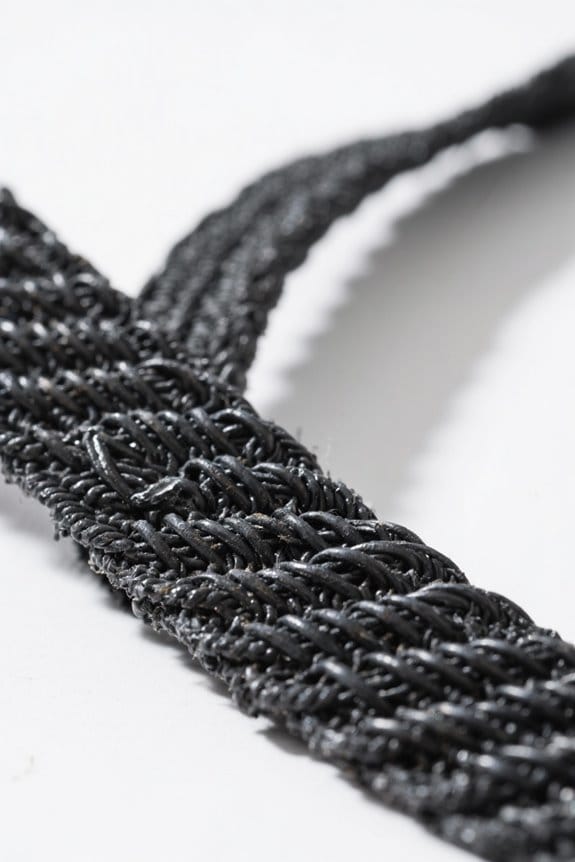
Because simple tools limited production, early processing techniques focused on manual preparation of latex and basic shaping methods, producing small-scale elastic items for practical use. Context: Ancient Mesoamerican cultures processed natural rubber, mixing latex with morning glory juice, then rolling, shaping, and air-drying to make balls, bindings, and basic bands. Limitations: These methods were artisanal production, small-scale, inconsistent, and unable to meet rising demand. Birth of Mastication: In 1820 Thomas Hancock invented the masticator, which shredded and softened scrap rubber, enabling recycling, easier molding, and lower costs. Consequences: Mastication allowed scale-up, improved uniformity, and set the stage for mass-produced elastic fabrics and reliable elastic goods. Manufacturers adopted mastication quickly, combining processed rubber with textiles to produce stretchable garments, footwear, and practical industrial components widely. Later innovations combined processed rubber with textiles to create stretchable garments featuring moisture-wicking properties.
The Breakthrough of Vulcanization and Its Consequences
After the accidental discovery, vulcanization transformed rubber from an unreliable natural material into a durable, industrially useful polymer. Process and Science: The vulcanization process heats natural rubber with sulfur, creating crosslinks between isoprene chains, which stabilizes elasticity and strength. Practical Effects: Treated rubber resists heat, cold, and swelling, enabling tires, hoses, soles, and medical goods. Examples and Variations: Adjusting sulfur yields flexible rubber or hard vulcanite, expanding rubber innovations across products. Economic Consequences: The new material supported factories, lowered costs, and attracted investment, while patent disputes shaped industry rules. Technical Legacy: Understanding crosslinking advanced polymer science and guided synthetic rubber work, influencing twentieth-century materials. Readers receive clear, practical facts, concise consequences, and pointers for deeper technical study, and sources are recommended for further reading. Many modern applications also emphasize comfort and hygiene by using moisture-wicking fabrics and soft, breathable materials in products like adaptive underwear for the elderly and post-surgical care.
Recommended Products
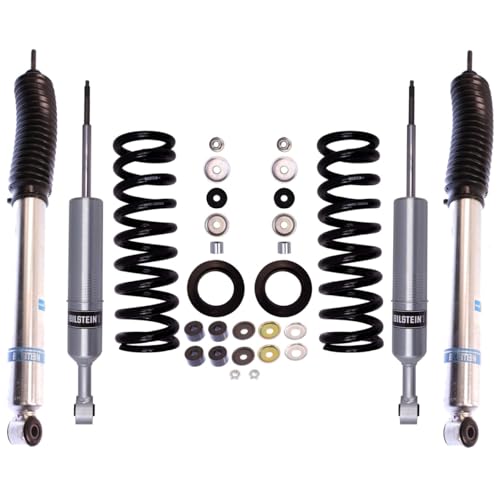
Increases Ground Clearance: Bilstein 6112 suspension kits are designed to provide more ground clearance, allow for larger tires and increase wheel travel


Package Includes: 2 X 10 lb, 2 X 15 lb, 2 X 20 lb, 2 X 25 lb, 2 X 35 lb, 2 X 45 lb, 2 X 55 lb Olympic Bumper Plate. Fit all Olympic barbells with 2-inch sleeves.
Patents and the Birth of the Rubber Band Industry
Although vulcanization was already known, Stephen Perry’s 1845 patent formalized the rubber band, creating a clear product category for manufacturers and buyers. The patent tied vulcanized rubber to a simple office item, enabling standard methods and markets to emerge.
Origins and Methods
– Perry used vulcanized rubber, firms extruded tubes, cured them on mandrels, then sliced rings, producing reliable bands.
Legal Context
– Patent disputes over vulcanization, and later patents, shaped access, licensing, and competition, influencing manufacturers’ choices.
Commercialization
- Later innovators, like Spencer, expanded production and patented improved methods, illustrating continuous rubber innovation and industrial scaling.
- Example: U.S. standards set tensile ranges in 1925, improving quality control widely.
Manufacturers also drew on standards emphasizing quality and comfort to appeal to consumers.
Recommended Products

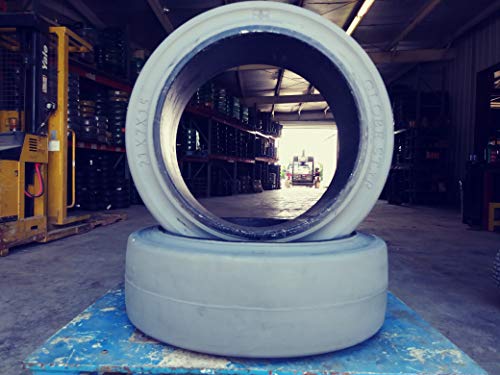
Forklift Tire 21x7x15

Global Expansion: Rubber Cultivation and Colonial Plantations
When British and Dutch colonizers transplanted Hevea brasiliensis seedlings to Asia, global rubber cultivation shifted from wild harvesting to organized plantations. This shift was propelled by Wickham’s seed transfer, which enabled large-scale plantation establishment in Asia. The article explains practical consequences for the reader.
Overview
– Seeds smuggled from Brazil enabled large-scale planting, breaking Brazil’s monopoly, and creating plantation models.
Production and Costs
– Southeast Asian estates used lower investment per worker, higher productivity, and export scale, reducing global prices.
Social Effects
– Plantations relied on colonial exploitation and regimented labor systems, displacing indigenous economies, ending many Amazon wild‑harvest jobs.
Consequences
- Amazon wild tapping declined, human suffering from past forced labor documented, and imperial powers gained market control.
- Wickham’s seed transfer led to over 38,000 acres planted in early 1900s, transforming supply chains and investment patterns, and altering colonial economies broadly.
The Rise of Synthetic Elastomers and Elastic Fibers
Trace the shift from natural rubber to synthetic elastomers, which reshaped supply chains, industrial uses, and wartime priorities worldwide. OVERVIEW: The move to synthetic rubber began with early 20th century polymerization, enabling reliable supply, predictable properties, and scaled manufacture. KEY DEVELOPMENTS: – 1909 isoprene polymerization at Bayer, 1910 Lebedev butadiene work, 1930s neoprene and Buna families. – WWII prompted government-coordinated GRS production, replacing lost colonial supplies. – Post-war butyl and ethylene-propylene advances expanded niche uses, chemical resistance, and long-term durability in infrastructure. INDUSTRIAL APPLICATIONS: Neoprene supplied heat and oil-resistant hoses and gaskets, SBR and NBR served tires and seals, EPDM offered ozone and UV resistance. CONSEQUENCES: Supply security improved, military logistics changed, industries standardized formulations for mass production and maintenance. Standards made repair and replacement easier, globally accepted. Later developments in elastic fibers also enabled improved moisture-wicking properties in performance apparel.
Recommended Products

For Everyday Heroes: Raxwell heavy-duty, ambidextrous, black nitrile gloves are constructed for safety, protection, and comfort for everyday jobs done by Everyday Heroes. Whether you work in food service, health care, janitorial industries, or any other industry where hand protection is crucial, these food-safe nitrile gloves are a trusted choice for handling a variety of tasks.


Natural Looking - ZGR 20mm Artificial Grass come with a nice short pile, providing a more natural look and feel. Adopting straight polyethylene and curled polypropylene yarns, soft to touch whilst maintaining resilience.
Transforming Textiles: Elastic Webbing and Clothing Innovations
Because elastic webbing blends stretch with structural stability, this section guides the reader through practical manufacturing steps, material choices, and common clothing applications. Materials and methods: Raw blends of polyester, nylon, cotton, rubber, latex or spandex are prepared, warped, and drawn-in, then woven, knitted, or braided on shuttleless or jacquard looms. Finishing and tests: Heat setting, dyeing, coating and quality checks fix tension, colorfastness, and durability. Types and properties: Woven webbing gives controlled stretch and shape retention, knitted yields higher conformity and elasticity. Applications and effects: Used in waistbands, cuffs, medical compression, sportswear and lingerie, elastic webbing improves fit, retention, and clothing adaptability, allowing size variation and movement, while bonding advances and patterned jacquard options add function and aesthetics. Maintenance extends lifespan and performance. Manufacturers often incorporate moisture-wicking fibers like polyester or nylon blends to enhance comfort and temperature regulation.
Recommended Products

DESIGN:All new for 2025, the Venture Skort continues Terry's mission to offer female cyclists the best fit, styling and versatility when it comes to cycling skorts.

Rugged Durability: Tough nylon mini-ripstop fabric resists scrapes and crashes, built to outlast seasons of trail riding or commuting

High-Performance CORDURA Fabric: 82% CORDURA nylon 18% spandex offers abrasion resistance, soft comfort, and 4-way stretch for free movement. Moisture-wicking fabric keeps you dry during intense run
Modern Applications, Production, and Economic Impact
Moving from webbing finishes to modern use, the reader should understand how elastic technologies are applied, produced, and valued globally.
Applications and examples
- Sportswear uses polyester-spandex blends for stretch, quick drying, and durable fit.
- Medical uses include bandages, braces, requiring high recovery, often rubber yarns.
- Swimwear and lingerie rely on nylon-spandex blends for smooth, secure fit.
- Industrial belts use woven elastic for strength and abrasion resistance.
- Transparent TPU bands enable invisible trims under garments.
Production and economics
- Raw materials combine polyester, nylon, elastane, natural or synthetic rubber, then woven or knitted.
- Heat setting fixes elasticity, followed by dyeing, cutting, quality control.
- Modern innovations and market trends favor automation, sustainable fibers, R&D, and reduced environmental impact globally.
Many manufacturers also incorporate cotton blends in adjacent textile products to enhance breathability and comfort.
Recommended Products

1.Material: Fabrics: 80% Nylon 20% Spandex. Lining: 100% Polyester fiber. Breathable fabric, Stretch lining super soft&comfortable,To create ultimate freedom of movement and the perfect fit.

JACQUARD KNIT UPPER

★Warm Material:Women slim one piece ski suit is made of 80% nylon,20% spandex,filling: 90/10 duck down(30g),which is super warm and comfortable,effectively preventing the cold,making you enjoy outdoor skiing activities;
Frequently Asked Questions
Are There Health Risks or Allergies Associated With Natural Rubber Latex?
Yes. Natural rubber latex poses health risks; latex allergies can cause immediate IgE-mediated reactions, angioedema, asthma or anaphylaxis, while rubber sensitivities include irritant and contact dermatitis; healthcare workers and surgical patients face higher risk overall.
How Environmentally Sustainable Is Large-Scale Rubber Cultivation Today?
Like a double-edged sword, large-scale rubber cultivation is environmentally unsustainable: it drives deforestation, soil degradation, biodiversity loss, and emissions; adoption of sustainable practices and eco friendly alternatives remains limited, mitigating further impacts, urgently needed globally.
Can Elastic and Rubber Products Be Effectively Recycled or Composted?
They can be recycled through mechanical, chemical, devulcanization and pyrolysis recycling methods, yielding varied quality, but composting challenges make biodegradation unfeasible; practicality depends on economics, feedstock variability, and facility availability, market acceptance and energy requirements.
What Were Major Legal Battles Over Rubber Patents and Rights?
Like storm-driven tides, major legal battles involved patent disputes and licensing agreements: Goodyear v. Day, Rubber Company v. Goodyear, Hancock’s British patents, dental vulcanite prosecutions, and aggressive AHRC enforcement campaigns, including deadly resistance and settlements.
How Did Rubber Industry Labor Conditions Affect Local Communities Historically?
Rubber industry labor conditions inflicted labor exploitation and disrupted livelihoods; community impacts included chronic poverty, displacement, health crises from dangerous work, weakened social structures, resistance movements, occasional urban enrichment leaving rural areas impoverished and marginalized.