As an Amazon Associate, we earn from qualifying purchases. Some links on this site are affiliate links at no extra cost to you. Our recommendations are based on thorough research and editorial judgment.


Post-Weight-Loss Underwear Adjustments

The reader should reassess underwear after weight loss to guarantee comfort, support, and skin protection. Fit: measure waist and hips, use brand charts, prefer high-waist or adjustable bands; avoid gaping. Fabrics: choose moisture-wicking, stretchy blends and flat seams to reduce chafing. Support: try graduated compression or high-coverage shapewear for excess skin, monitor circulation and comfort. Care: wash gently, replace worn elastic. More practical options and fitting tips follow with step by step sizing examples included.
Key Takeaways
- Re-measure waist and hips with a soft tape and consult brand size charts instead of old dress sizes.
- Choose high-stretch, breathable fabrics (Lycra blends, moisture-wicking) to prevent chafing and improve fit.
- Opt for higher-rise, full-coverage panties or adjustable waistbands to manage gaping and provide gentle abdominal support.
- Use flat seams, tagless designs, and varied crotch lengths to reduce irritation and align gussets properly.
- Consider graduated compression or supportive shapewear fitted professionally for excess skin, introducing wear gradually to monitor comfort.
How Body Shape Changes Affect Underwear Fit

You may be interested


Because weight loss changes more than numerical measurements, the reader should expect noticeable differences in how underwear fits and feels, and prepare to adjust styles accordingly.
Overview: Body shape dynamics after weight loss alter contours, girth distribution, and soft tissue placement, causing gaps, riding, or compression that affect comfort.
Key consequences:
- Redistribution of fat can change waist-to-hip ratio, producing gaping at waistband or leg openings.
- Previously shaping garments may lose effectiveness, reducing support or creating folds.
- Gusset and seam misalignment can cause irritation if anatomy shifts relative to construction.
Practical fit adjustments:
- Try styles with varied crotch length, seam placement, and elasticity.
- Prioritize adjustable, high-stretch fabrics, and multiple cuts for modified curves.
This informs selection without measuring advice. Compare brands that address shape variance.
Consider options with a ComfortSoft waistband to avoid pinching and visible lines.
Measuring and Choosing the Right Size After Weight Loss
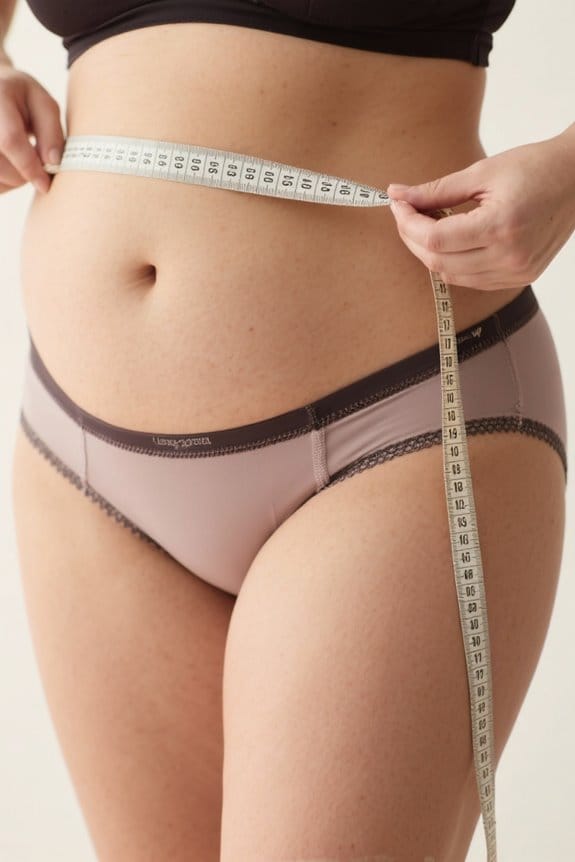
How should one measure and choose new underwear sizes after weight loss, to guarantee comfort, function, and garment longevity? A detached guide lists precise steps, fitting techniques, and comfort adjustments, so garments perform well and last.
Measurement steps
- Use a soft measuring tape, stand with feet together, keep tape parallel to floor, place one finger between tape and body.
- Find natural waist by bending, measure waist at narrowest point, hips at fullest part, record inches.
Size selection
- Consult brand-specific size charts, match inches to charts, avoid relying on dress sizes.
- If between sizes, consult fit guides, avoid downsizing to prevent excess compression and fabric damage.
- Verify waistband sits flat, leg openings are even, crotch fabric balances coverage, request resize if seams roll or sag.
Choose underwear made from breathable fabrics to reduce moisture and improve comfort.
Recommended Products

BODYSUIT TUMMY CONTROL - A full body shaper that supports and compresses your chest, back, abs, buttocks, and thighs. Revolutionizing mens shapewear !

FIRM COMPRESSION: Our mens compression vest delivers powerful control in the chest, waist, and abdomen. This body shaper for men provides a sculpted look and targeted shaping, ideal for daily wear or workouts.

Sculpting Without Squeeze – Targeted Comfort:Our 3-layer compression shapes your tummy, waist, and thighs without that tight, pinched feeling. The mid-thigh length offers full coverage and slimming, while the skin-friendly 4-way stretch fabric makes dressing easy. No pinch, just smooth, breathable shaping you can wear all day.
Fabrics and Features to Minimize Irritation and Chafing
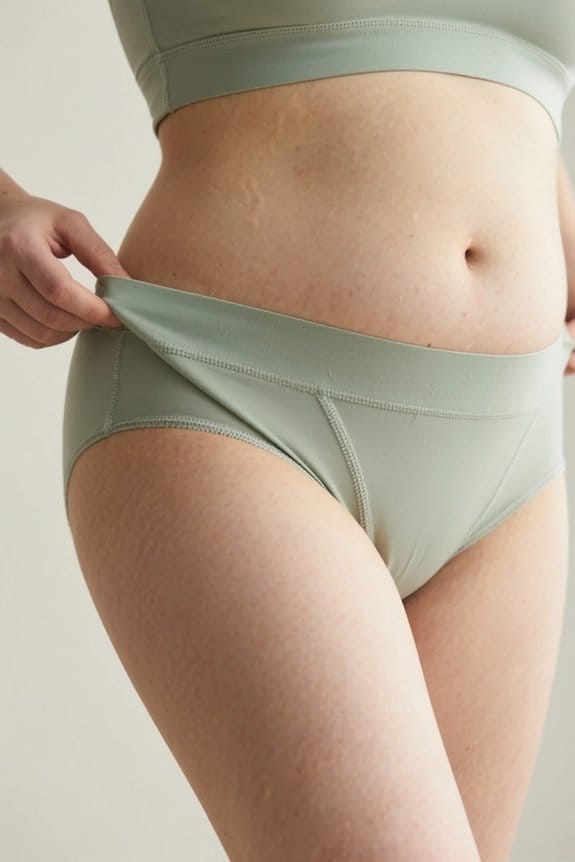
When selecting fabrics and design features to minimize irritation and chafing after weight loss, the reader should prioritize moisture control, seam construction, and hypoallergenic materials to protect sensitive skin and improve comfort.
Fabric choices: Moisture-wicking fabrics like polyester blends and Lycra move sweat away, dry quickly, and show moisture wicking benefits, reducing friction and rashes. Natural fibers may help if blended to avoid trapped moisture.
Seam and fit: Choose flat or seamless construction, tagless designs, and looser cuts to lower abrasive contact, particularly in skin folds.
Skin care adjuncts: Use unscented detergents, avoid permanent-press finishes, and consider absorbent powders or zinc oxide for high-friction sites.
Hypoallergenic materials decrease allergic reactions and promote safer long-term wear. Loose garments also improve airflow, reducing heat and moisture. Consider options made from bamboo viscose for inherent antimicrobial properties and odor reduction.
Recommended Products

Chic Hipster Cut: From the pioneering one size underwear program, this hipster seamless underwear for women gives classic hipster coverage with a modern twist that's fit for any season

Smooth and Seamless Underwear: This seamless underwear for women is classic, smooth, and breathable enough for all-day wear; a comfortable, easy fit for any season

Mid-rise, 4-way stretch
Using Compression Garments and Shapewear Safely
Why choose proper compression, the wearer should understand that correct garments support healing, control swelling, and reduce complications.
Fit principles:
- Garments should be snug but allow a hand under the fabric, preventing circulation loss, this is key for compression garment safety.
- Flat seams, no bunching, adjustable closures help maintain even pressure and comfort.
Signs and actions:
- Numbness, tingling, persistent redness, or pain require immediate adjustment or removal to avoid tissue damage.
- Blistering, persistent swelling, or breathing difficulty are emergencies, seek medical advice.
Usage tips:
- Wear as recommended, remove briefly for bathing, rotate clean garments.
- Understand risks of over compression, it can hide complications and impair blood flow.
- Seek professional fitting if unsure, sizes vary, adjustments are essential.
Many adaptive underwear products feature Velcro closures which simplify dressing for those with limited dexterity.
Recommended Products

⏳ SIZE WARNING – MEASURE FIRST (IMAGE 3) This is a high-compression Stage 2 / Step 2 faja colombiana, not standard clothing sizing. Measure waist + hips and confirm Size Chart (Image 3). A very snug faja para mujer feel at first wear is normal.

MARENA FCBHRS Female Curves Bodysuit - Short Length - Tummy Control Post Surgery Compression Garment
BODY SHAPER FOR WOMEN: Whether naturally curvy or seeking an hourglass figure, this bodysuit will help you recover in comfort with optimal support. Adjustable 3-row hook-&-eye front closures and shoulder straps provide an ideal customizable fit.

SUPPORT GIRDLES FOR WOMEN: This short-length girdle is a reinforced version of our best-selling girdle with a high back and extra compression. Expertly designed for added stability of the abdomen, back, and sides for comfort and support through recovery.
Managing Excess Skin With Supportive Underwear
Building on correct compression practices, readers should consider supportive underwear specifically designed to manage excess skin after major weight loss. Overview: Support underwear offers immediate smoothing and targeted lift, it reduces friction and protects skin folds, and it functions best when skin elasticity is limited. Practical choices:
- Waist cinchers and camisoles compress abdomen and back, choose firm, breathable fabrics with anti‑slip bands.
- Open‑bust tanks paired with supportive bras target the breasts, structured boning adds shape.
- Extra‑firm compression garments suit severe laxity, introduce wear time gradually, check circulation.
Adjuncts and limits: Non‑surgical garments improve comfort and hygiene, but persistent, problematic excess skin may require surgical body contouring for durable correction. When possible, choose high-waist designs with wide anti‑slip bands to prevent roll-down and enhance support.
Recommended Products

Unlock Your Feminine Hourglass Figure: DressTech crossdresser hip pads instantly transform masculine frames into stunning hourglass figures! Designed specifically for crossdressers, drag performers, and trans women.

Light shaping

Isavela Womens 2nd Stage High Waist Abdominal Girdle Panty Length With NO Zippers (GR02) (XL, Beige)
Applicable Procedures: Abdominoplasty, Abdominal Liposuction, Hip Liposuction, Tummy Tuck, Lipoplasty, Suction Lipectomy, Stomach Liposuction, Liposculpture, Buttock Lifts
Psychological Benefits of Well-Fitting Underwear
Although often overlooked, well-fitting underwear can produce measurable mental effects, offering practical gains in confidence, anxiety reduction, and body satisfaction that support daily functioning and self-care. Confidence Effects: Well-fitted undergarments increase underwear confidence, reinforce identity, and reduce self-consciousness, which sustains task focus and self-esteem. Anxiety and Comfort: Proper fit and natural fabrics lower irritation, diminish anxiety triggers, and provide emotional comfort, freeing attention for daily tasks. Color and Mood: Choice of black, white, red, or blue supports assertiveness, freshness, energy, or calm, useful for mood management. Practical Outcomes: Improved fit reduces body checking, supports realistic self-perception, and increases likelihood of consistent self-care. Example consequence: less distraction, better task completion, and incremental mood regulation across routine activities. Benefits persist without external validation, supporting internal regulation. Design elements such as targeted support zones and moisture-wicking blends can enhance these psychological benefits by improving physical comfort and reducing irritation.
Practical Wardrobe Update and Maintenance Tips
Assess and Plan: Practical wardrobe updates begin with a clear assessment of current clothing, because fit and comfort affect daily confidence and task performance.
Survey: Lay out all garments, sort into fits, oversized, damaged, or unworn piles, try items on, record retained pieces to spot gaps in wardrobe essentials.
Immediate Actions: Donate or sell oversized items to reduce clutter and fund purchases, measure regularly and replace ill-fitting undergarments, seek professional bra fittings for best support.
Shifting Strategies: Use belts, choose stretchy fabrics, layer clothing, and separate shifting pieces for easy access.
Capsule and Budget Tips: Build a capsule with versatile basics, shop clearance and consignment, alter favorites to extend usefulness.
Clear, practical steps follow from assessment. They provide order, savings, comfort, and long-term fit. Consider high-waist full-coverage options that provide gentle abdominal support and prevent waistband rolling over healing incisions.
Recommended Products
SUPPORT GIRDLES FOR WOMEN: This short-length girdle is a reinforced version of our best-selling girdle with a high back and extra compression. Expertly designed for added stability of the abdomen, back, and sides for comfort and support through recovery.

High Compression Design: Our fajas postparto para mujer offer stomach shapewear, providing firm control and support. This faja postparto para mujer is for post-surgery recovery, ensuring the best tummy control shapewear experience. CHECK OUR SIZE CHART in the gallery before the purchase. It is highly recommended to measure your waist and hips to find your size.

Powerful, Lightweight Compression: The OnCore Mid-Thigh Short shapewear for women delivers Level 4 sculpting, feeling like a super firm hug
Frequently Asked Questions
Are Compression Garments Covered by Health Insurance After Bariatric Surgery?
Yes, coverage depends on insurance eligibility and compression benefits determination; Medicare and some private plans cover compression garments for lymphedema or venous conditions after bariatric surgery when prescribed, with prior authorization and cost‑sharing possible. Varies.
How Should I Wash and Care for Shapewear to Maintain Compression?
Like tending a vintage tapestry, shapewear fabrics respond best to gentle washing techniques: hand wash with mild detergent and cold water, soak, no bleach or softener, rinse thoroughly, press water, air dry flat, store folded.
When Is It Safe to Stop Wearing Compression Garments Post-Surgery or Weight Loss?
They may stop or reduce compression when swelling and drainage have ceased, pain or numbness are absent, and garments fit comfortably; on a post surgery timeline depends on individual healing, usually four to eight weeks.
Can Underwear Adjustments Help During Sexual Activity or Intimacy Concerns?
Yes, like Odysseus finding shore, one can adjust underwear to improve underwear comfort and intimacy confidence; choosing natural fibers and proper fit enhances blood flow, reduces irritation, and supports sexual responsiveness and self-assured connection overall.
How Do I Donate or Responsibly Dispose of Underwear With Elastic or Shaping Panels?
They can donate gently used, clean underwear with elastic or shaping panels to charities, Buy Nothing groups; for sustainable disposal, use textile recycling centers or repurpose elastic and fabric for crafts, composting only natural fibers.