As an Amazon Associate, we earn from qualifying purchases. Some links on this site are affiliate links at no extra cost to you. Our recommendations are based on thorough research and editorial judgment.

Understanding International Size Conversions

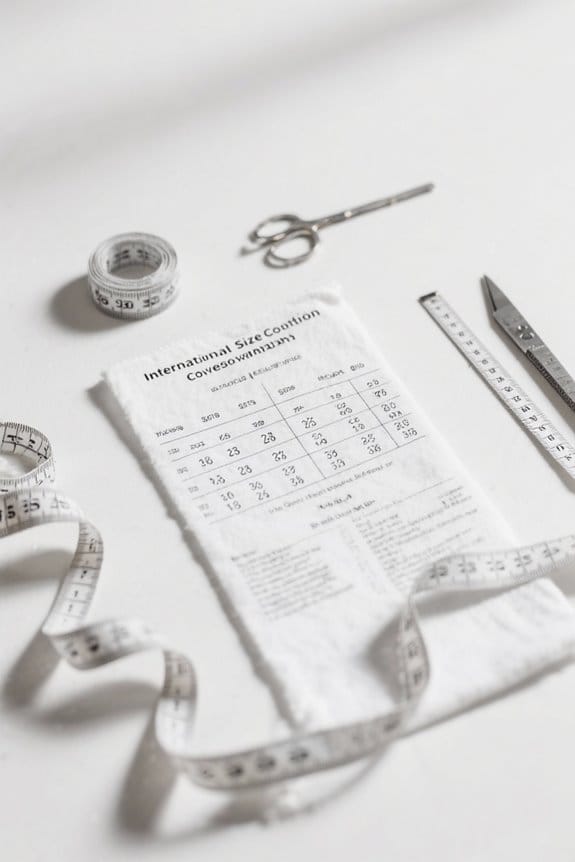
Size overview: International sizes map differently, UK 4 = US 0 = EU 32 = IT 36, UK 10 = US 6 = EU 38 = IT 42; Women’s: use bust, waist, hips measurements and consult brand charts; Men’s/Children’s: use chest/waist/inseam or age-height guides; Shoes: measure foot cm, convert to EU/UK/US using brand charts. Incorrect conversion causes poor fit, returns, or travel issues. More examples, size maps, measurement tips, fabric-fit notes and return-policy checks follow for confident purchases.
Key Takeaways
- Measure body or foot length accurately with a soft tape and compare to brand-specific size charts rather than numeric labels.
- Use region conversion rules (e.g., UK4=US0=EU32=IT36) as starting guides, not exact guarantees across brands.
- Remember Asian sizes often run smaller (Japan ≈ US minus 5–6 sizes; Korea typically small), so size up if unsure.
- For shoes, measure foot centimeters and consult brand tables; EU sizes roughly equal US size plus ~31 for women.
- Consider fabric stretch, garment fit type, and retailer return policies before ordering internationally.
How UK, US, EU and Italian Clothing Sizes Compare
You may be interested


Because sizing varies by region, the reader should use clear cross-reference rules when selecting clothes online or while traveling, to avoid fit surprises and returns. Quick conversion guide:
- UK 4 = US 0, EU 32, Italian 36; UK 6 = US 2, EU 34, Italian 38.
- UK 8 = US 4, EU 36, Italian 40; UK 10 = US 6, EU 38, Italian 42.
- UK 12 = US 8, EU 40, Italian 44.
Practical notes: The guide highlights size differences across systems, and it helps match items to clothing trends that use regional sizing. Consequences: wrong conversion causes poor fit, returns, or altered travel plans. Use the chart, measure garments, and confirm retailer policies before purchasing. Check measurements every time, consistently. Comfortable fabrics like breathable fabrics are important to consider alongside sizing to ensure the best fit and comfort.
Women’s Garment Size Mapping Across Regions
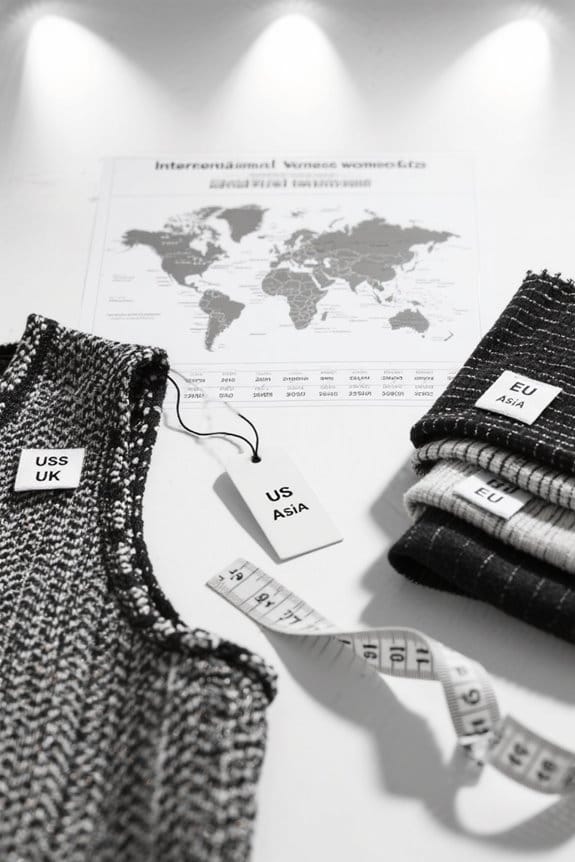
– One clear rule guides international shopping: numeric and letter sizes do not match directly across countries, so the reader should compare measurements, brand charts, and garment types before buying. Women’s garment mapping emphasizes measurement accuracy and tracks regional size variances across Asia, Europe, and plus sizing. Asian conversions: Japanese sizes run about 5–6 numbers smaller than US, China varies by brand, Korea runs small. European systems: French, German, Italian differ, note French 34 ≈ US 2, Italian 38 ≈ French 34. Plus sizes: US 1X,2X map roughly to EU50,52 and Japan19,21; XXL often EU52–54. Practical tip: use bust, waist, hip centimeters on charts, check garment type, expect brand differences and sizing drift. Measure garments and compare returns policies before purchase to reduce fitting issues. For underwear selections, prioritize fabrics with moisture-wicking properties to enhance comfort and fit.
Recommended Products

Try it once, be hooked forever. Our best-selling series.

Iconic fit with a fashion look that changes every season.

Try it once, be hooked forever. Our best-selling series.
Men’s and Children’s Size Conversion Basics
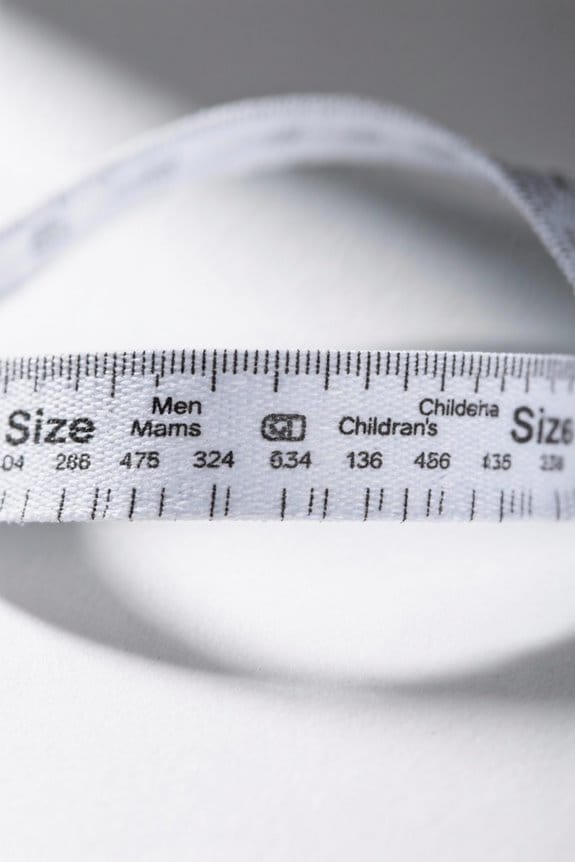
After covering women’s international sizing patterns, the focus moves to men’s and children’s systems, which use different reference points and require separate measurement checks. The section explains measurement basics, conversion patterns, and practical checks for fit.
Men’s size fundamentals
- Chest, shoulder and sleeve measurements determine jacket sizes, US 38 EU 48, select larger size if between measures.
- Pants follow waist/inseam rules, US 30 EU 46, note inseam varies independently from waist.
Children’s size guidance
- Use age/height weight combos or numeric labels, verify brand charts, choose larger size for growth.
- Measure chest, waist, and height, then compare to regional charts to avoid sizing errors.
- Incorrect selection leads to tight joints, restricted movement, faster outgrowing, and possible returns or alterations.
Consult brand charts before purchase online. When choosing briefs, consider features like moisture-wicking technology to improve comfort and manage sweat.
Shoe Size Equivalents: UK, EU, US and AUS
One key step in converting shoe sizes is measuring foot length in centimeters, then matching that measurement to regional charts. The section explains UK, EU, US and AUS equivalents, using size charts aligned to international standards.
UK/AUS men often match, so UK 6 = AUS 6, equals US 7, EU 39. Women’s AUS usually follows US, consequently UK 4 ≈ US 6 ≈ AUS 6. EU uses Paris points, sizes run higher, for example EU = US + 31 (approximate). Half sizes increase precision. Children and babies start at EU 15, progress with half increments, measure in cm for best fit. Brands vary, so mismatches affect comfort and returns, consult brand charts before purchase. Check both foot length and brand-specific tables to avoid errors. Also, choosing footwear and socks made from high cotton blends can improve comfort due to moisture-wicking properties.
Practical Tips for Accurate Online Sizing
Several key checks help the reader get accurate online sizing, balancing measurements, brand charts, and garment fit to reduce returns and poor fit. Look for fabric blends like 95% cotton and 5% spandex for breathable stretch and comfort. Practical tips follow to prevent size confusion and improve measurement accuracy, offering steps and checks.
Measure Body Accurately
- Use a soft tape at fullest points, parallel to floor, snug not tight.
- Record inches and centimeters, compare to brand-specific charts.
Compare to Brand Charts
- Check units and garment-specific charts, note fit notes (slim, regular, loose).
- Cross-reference regional conversions when needed.
Fit, Style, and Final Checks
- Consider fabric stretch, customer reviews, same-brand garments.
- Re-measure if unsure, verify return policies for international orders.
- Allow minor batch variations, contact customer service for clarification before purchasing, and sizing history.
Recommended Products

[ SOLD BY INDIVIDUAL UNITS ] – Each quantity comes in a separate piece. If you choose 1-Yard with the quantity of 5, you will receive 5 separate 1-Yard pieces. If you choose 2-Yards with the quantity of 5, you will receive 5 separate 2-Yard pieces

Plunging neckline hits at the breastbone

Fabric: Mid-weight, stretch coated denim
Frequently Asked Questions
How Do Uk/Us Conversions Work for Plus-Size Ranges Beyond Standard Charts?
They convert by mapping plus size categories across systems using measurement-based equivalencies (e.g., 1X ≈ UK20/US14W), noting conversion challenges like inconsistent increments, brand variance, and regional availability affecting fit, and recommending measurements over labels instead.
Are Petite and Tall Sizing Differences Included in International Size Conversions?
No; although some charts imply equivalence, international conversions typically omit petite sizing and tall sizing, so shoppers must consult brand-specific tables, measurements, or length options for accurate fit and request alterations when necessary before purchase.
How Do Lingerie and Bra Sizes Convert Between UK, EU, US, and IT?
UK, US bands match numerically; EU/IT use continental numbers (e.g., EU60=UK28); cup letters shift (UK DD=US E=EU/IT E). She should also check fabric composition and support levels for fit and comfort before purchasing online internationally.
Do Vintage Garments Require Different Size Conversion Considerations?
Yes, vintage garments require different conversion considerations; buyers should prioritize garment measurements because vintage fabric, varying cuts, and sizing variability across decades and brands often make numeric conversions unreliable and try multiple sizes or alterations
How Do Brand-Specific Sizing Inconsistencies Affect International Conversions?
Brand-specific sizing inconsistencies complicate international conversions by undermining uniform measurements; brand variations override nominal labels, making sizing standards unreliable, forcing reliance on body measurements, brand guides, reviews, and trial purchases to achieve consistently acceptable fit.