As an Amazon Associate, we earn from qualifying purchases. Some links on this site are affiliate links at no extra cost to you. Our recommendations are based on thorough research and editorial judgment.


Post-Surgery Recovery and Underwear Selection

The patient should choose breathable, seamless, properly sized underwear after surgery to protect incisions, control swelling, and reduce infection risk. Timing: wear compression garments first week, then shift gradually over three to six weeks. Fabrics: cotton or bamboo blends, moisture-wicking, hypoallergenic. Design: high waist for abdominal, wire-free for breasts, soft seams, adjustable compression. Care: gentle wash, air dry, replace stretched garments. Watch for pain, redness, drainage or numbness; contact the surgeon to learn more details.
Key Takeaways
- Wear prescribed compression garments continuously in the first week, then gradually transition per clinician guidance through weeks 2–6.
- Choose soft, breathable, moisture-wicking, hypoallergenic fabrics to reduce irritation, bacterial growth, and wound complications.
- Prefer seamless, tagless designs with gentle waistbands, adjustable compression, and internal pockets for cold/heat packs.
- Fit garments using accurate waist/hip measurements, avoid tight bands or chafing, and launder daily with fragrance-free detergent.
- Stop or adjust underwear and contact your surgeon for increased pain, redness, swelling, breathing issues, or persistent skin breakdown.
Timing for Switching Post-Surgical Underwear
You may be interested


When should the patient change post-surgical underwear? The patient follows a clear post op timeline, guided by the surgeon, to plan an underwear shift based on swelling and support needs.
Immediate (Days 1–7): Wear medical compression 24/7 except showering, use loose, easy underwear, changing only per surgeon, to reduce fluid and support healing.
Early (Weeks 2–3): Continue compression, consider softer supportive underwear with approval, avoid pressure on incisions, check for increased pain or swelling if changed too soon.
Transitional (Weeks 3–6): Introduce moderate compression or targeted garments, reduce full-time wear gradually.
Late and Long-Term (Weeks 6+): Move toward normal underwear when swelling minimal, replace stretched garments to maintain effectiveness.
Follow-up visits, personalized guidance, and symptom changes determine exact timing and adjustments for safe recovery. Adaptive underwear made from soft breathable materials can improve comfort and reduce skin irritation during recovery.
Why Fabric Choice Matters After Surgery

Although often overlooked, fabric selection directly affects healing, comfort, and infection risk after surgery, and should be chosen deliberately.
Key considerations:
- Natural fibers improve air circulation, reduce moisture, lower infection risk, these fabric benefits support incision healing.
- Seamless, soft materials minimize friction and irritation, preventing wound reopening or skin breakdown.
- Moisture-wicking, breathable options keep skin dry and limit bacterial growth, an important infection prevention consequence.
- Hypoallergenic, low-chemical fabrics reduce dermatitis risks, and are kinder to sensitive post-surgical skin.
- Supportive, elastic but non-binding fabrics manage swelling and provide mild compression without constriction, improving recovery outcomes.
- Smooth, tag-free designs increase comfort factors, allow movement, reduce chafing, and help patients wear garments longer without irritation.
Choice affects medical outcomes, patient satisfaction, and practical daily wear for recovery.
Choosing garments made from moisture-wicking fabrics like polyester and spandex can help keep skin dry and support faster recovery.
Recommended Materials and Fabrics

One key decision after surgery is selecting fabrics that balance breathability, moisture control, softness, and support, because each trait affects healing and comfort.
Recommended materials
- Natural fibers: cotton comfort offers lightweight breathability, high absorbency when dry, but slow drying that can trap moisture if wet frequently.
- Bamboo benefits include natural breathability, antibacterial qualities, and soft texture that reduces skin irritation, aiding gentle healing.
- Synthetic blends: polyester, nylon, and spandex provide durability, stretch, fast drying, and shape retention, useful for fit and swelling management.
- Mesh options: disposable or reusable mesh give ventilation, secure pad placement, and lower friction against sensitive sites.
- Moisture-wicking fabrics reduce infection risk, keep incisions dry, and promote faster healing when paired with proper hygiene and clinician guidance.
Choose materials with GOTS certification when possible to ensure adherence to organic and sustainable standards.
Design Features That Aid Healing
After selecting fabrics for breathability and moisture control, attention should move to specific design features that actively support healing, limit complications, and improve comfort.
Seam and Friction Control
– Seamless construction prevents irritation over incision sites, reducing chafing and preserving skin integrity, showing design innovation and healing benefits.
Support and Compression
– Integrated, adjustable compression stabilizes tissues, promotes circulation and lymphatic drainage, lowering hematoma and seroma risk.
Therapeutic Functionality
– Internal pockets for cold or heat packs, ostomy accommodations, and stretch panels enable care without disrupting wounds.
Hardware and Fit
– Tagless designs, soft waistbands, and minimal closures avoid pressure points, reduce infection vectors, and ease dressing changes.
Breathability and Moisture Management
– Ventilated zones and moisture-wicking layers maintain dryness, prevent maceration, and support healthy skin microclimate during recovery.
Healthcare providers often recommend gentle compression during the first weeks to help reduce swelling and support healing.
Sizing and Fit Guidelines Post-Op
When selecting post-operative underwear, the patient should prioritize accurate sizing and a gentle fit, because correct measurements and thoughtful design reduce pressure, friction, and wound complications. Fit Principles: Accurate waist measurements and hip measurements guide selection, choose one size larger than normal to allow postoperative swelling, verify waistband rests without digging, leg openings must be loose to prevent chafing, crotch coverage should avoid riding up. Materials and construction: Prefer breathable cotton blends and soft elastic materials at edges, smooth seams reduce irritation, open-front options ease dressing. Brand guidance: Compare brand size charts, note variations in inch ranges, consider high-rise waists for hip surgery. Consequences of poor fit include pressure on incisions, increased friction, delayed healing. Measure standing, tape parallel to floor for consistent results. Consider underwear made from moisture-wicking fabrics and seamless construction to enhance breathability and reduce chafing during recovery.
How Gentle Compression Supports Recovery
Because gentle compression applies steady, controlled pressure, it reduces swelling, improves circulation, and helps tissues stay in place during healing.
Key benefits:
- Compression benefits include reduced interstitial fluid, improved lymphatic drainage, and lower bruising risk, enhancing predictable recovery timelines.
- Fluid management is achieved through graduated pressure, moving excess fluid away from incision sites, cutting swelling substantially in early weeks.
Support and outcomes:
- Circulation improves oxygen delivery and waste clearance, promoting faster tissue repair, and lowering clot and infection risks.
- Mechanical support limits movement at surgical sites, reduces tension on sutures, and decreases pain scores during peak recovery.
Choose garments that balance pressure, comfort, and access for monitoring.
– Follow manufacturer instructions for wear time, typically 4-6 weeks, to maximize compression benefits, and consult clinical team.
Additionally, choosing garments with moisture-wicking fabrics can help keep skin dry and comfortable.
Ensuring Easy Access for Wound Care and Checks
How can post‑surgery underwear allow rapid wound checks without losing needed support or compression? The reader is shown practical options that balance easy access with secure compression, promoting patient comfort and safe monitoring.
Design features
- Tear‑away or side‑opening garments allow inspection without full removal, preserving compression and support.
- Adjustable straps and large openings enable targeted checks, accommodate drains, and reduce movement during care.
Clinical benefits
– Reduces contamination risk, enables frequent monitoring for infection or bleeding, and supports timely intervention.
Practical notes
– Choose low‑rise or high‑waist styles for the surgical site, use soft seams to prevent friction, guarantee openings fit absorbent pads.
Patient and caregiver experience
– Easy access speeds care, increases independence, reduces caregiver effort, and improves recovery satisfaction overall.
Fabrics like bamboo viscose can be 20–30% more breathable than cotton, aiding moisture management during recovery.
Hygiene, Washing, and Garment Maintenance
Several basic hygiene and laundry practices help protect healing tissue, reduce infection risk, and keep recovery underwear safe to use. Hygiene Steps: Gentle cleansing with mild soap and warm water is advised, pat-drying avoids irritation, prescribed ointments go on before fresh underwear, and scented cleansers are avoided to prevent tissue reaction.
Laundry and Care: Recommended laundry frequency is daily at minimum during early recovery, increase changes with sweating or moisture, pre-wash new garments before first use. Use a gentle, fragrance-free detergent choice, skip fabric softeners, wash on delicate, and air-dry when possible to preserve breathable fabrics.
- Prefer cotton or bamboo for breathability, avoid lace and tight elastics.
- Carry spare pairs, consider disposable items if contamination risk is high.
Red Flags: When Underwear Is Causing Problems
After following hygiene and laundering guidelines, the patient should still watch for signs that underwear is causing harm, since clean garments can still fit or behave in ways that impede recovery.
Red flags and consequences
- Tightness causing underwear discomfort, reduced circulation, dizziness, breathing restriction, or impaired wound healing.
- Persistent skin irritation, redness, chafing, blisters, moisture buildup, or foul odor suggesting infection risk.
- Pain at incision sites, increased swelling, or visible pressure marks after brief wear.
- Digestive upset, reflux, constipation, or urinary difficulty linked to abdominal compression.
- Limited movement, muscle weakness, or sensation of pressure that prevents normal activity.
Action steps
- Remove garments immediately if signs appear, document symptoms, and consult the surgical team.
- Seek professional advice promptly to avoid complications and delayed healing immediately.
Consider switching to underwear made from breathable cotton with a high-waisted, full-coverage design to reduce irritation and support recovery.
Underwear Choices for Abdominal vs. Breast Procedures
Because post-surgical needs differ by procedure, underwear choices should match the treated area, support needs, and incision locations, so the patient can protect wounds, control swelling, and maintain comfort during recovery.
Abdominal options
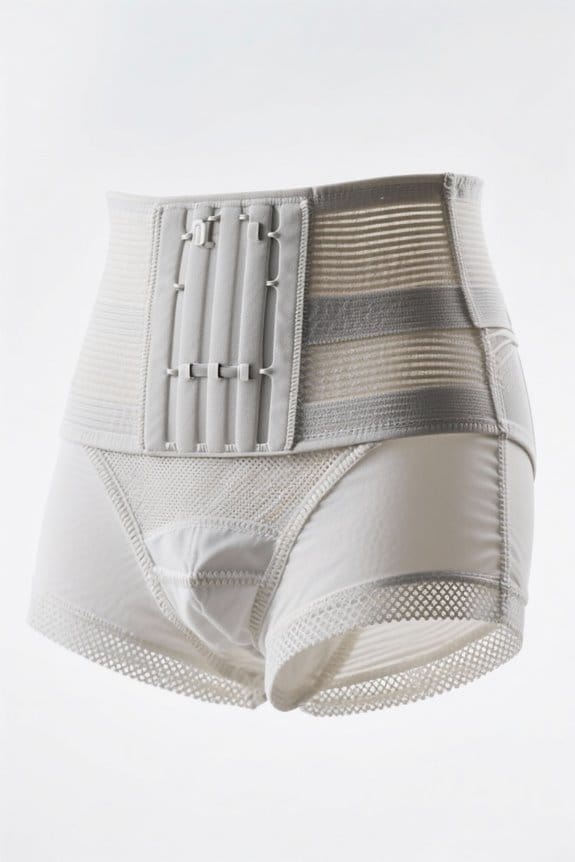
- High-waisted, seamless garments provide abdominal support, include compression panels and step-in or velcro closures for easy use.
- Soft, breathable fabrics like bamboo or cotton reduce irritation, choose one to two sizes larger to accommodate swelling.
- Typically worn four to six weeks, failure to use compression may increase swelling and delay healing.
Breast options
- Surgical or soft, wireless bras offer breast comfort, use front-fastening designs to avoid arm lifting, and avoid underwire.
- Wear surgical bras for about four weeks, inadequate support can cause discomfort, distorted healing, or increased pain.
- Launder garments regularly and keep a spare to maintain hygiene, check seams and closures for irritation risks.
The clinician should advise specific garment choices, matching compression level and fastening type to the procedure and body size needs.
Many options incorporate breathable fabrics to regulate temperature and moisture for improved comfort.
Phased Return to Regular Underwear
Following selection of procedure-appropriate garments, the plan for returning to regular underwear should match healing milestones, swelling patterns, and incision locations, so the patient avoids pain, delayed healing, or increased swelling.
Overview
– A phased schedule aligns underwear frequency with healing stages, minimizing risk and guiding comfort.
Phase 1 Days 1-7
– Wear supportive, easy-access underwear; continue 24/7 compression except showers, change garments for wound care.
Phase 2 Weeks 1-3
– Introduce compression underwear with abdominal support, avoid tight styles until incisions show healing.
Phase 3 Weeks 3-6
– Shift to moderate compression, reduce wear to 12–23 hours daily, try tummy tuck pants for mobility.
Phase 4 Weeks 6+
– Reintroduce soft, breathable regular underwear around 4–6 weeks, extend compression for major procedures as advised.
Surgeon guidance is essential.
Choose underwear made from breathable fabrics such as cotton-elastane blends to reduce irritation and support healing.
Frequently Asked Questions
Will Insurance or Prescriptions Cover Post-Surgical Underwear Costs?
Sometimes insurance coverage will reimburse post-surgical underwear when medical necessity is documented; claim approval depends on insurer, plan, and state. Prescription guidelines requiring a provider’s prescription and itemized receipts are commonly necessary for reimbursement typically.
Where Can I Safely Purchase Specialized Post-Op Underwear Locally or Online?
Better safe than sorry. They can purchase specialized post-op underwear from trusted local retailers like pharmacies, supply stores and department stores, or online boutiques including Leonisa, THEYA, Nyssa and Shreddies, checking returns policies and sizes.
How Many Pairs Should I Pack for My Hospital Stay and First Week Home?
They should pack about five to seven pairs for hospital stay and first week. Including disposable and reusable options as recovery essentials supports hospital comfort, bleeding changes, laundry rotation, and peace of mind throughout recovery.
Can Post-Surgical Underwear Be Worn During Sexual Activity or Intimacy?
Generally, patients may wear post-surgical underwear during intimacy if surgeon-approved; it can support healing, enhance post surgical comfort and reduce movement. Intimacy considerations include avoiding pressure, moisture buildup, communication with partner, and monitoring for pain.
Are Disposable Underwear Options Appropriate for Travel After Surgery?
Yes. Disposable options suit travel after surgery: they offer travel comfort, lightweight packing, leak protection and hygiene, and easy disposal. However, they may lack adjustable support, can incur cost and generate waste, so plan supplies.