As an Amazon Associate, we earn from qualifying purchases. Some links on this site are affiliate links at no extra cost to you. Our recommendations are based on thorough research and editorial judgment.


No-Show Underwear Technology Explained

Overview: No-show underwear uses seamless knitting, laser-cut edges, and smooth fabric blends to hide panty lines and improve comfort, providing a low-profile silhouette. Materials & Tech: Nylon, spandex, modal, and bamboo, plus moisture-wicking fibers and antimicrobial finishes, move sweat away and reduce odor, while silicone grips and bonded hems prevent rolling. Care & Fit: Wash cold, air dry, size per brand charts to retain stretch and longevity. Further sections explain materials, fit, and care details.
Key Takeaways
- No-show underwear uses smooth microfiber, nylon/spandex blends, and eco-friendly fibers (modal, bamboo) for stretch, durability, and minimal bulk.
- Seamless construction and laser-cut edges reduce visible panty lines by eliminating side seams and creating flat, bonded hems.
- Moisture-wicking fibers and mesh zones move sweat to the surface for evaporation, improving comfort during activity.
- Antimicrobial finishes (silver, zinc) and breathable gussets control odor-causing bacteria while maintaining skin health.
- Automated knitting, heat sealing, and inspection systems ensure consistent sizing, low waste, and reliable fit across production runs.
Overview of No-Show Design

You may be interested


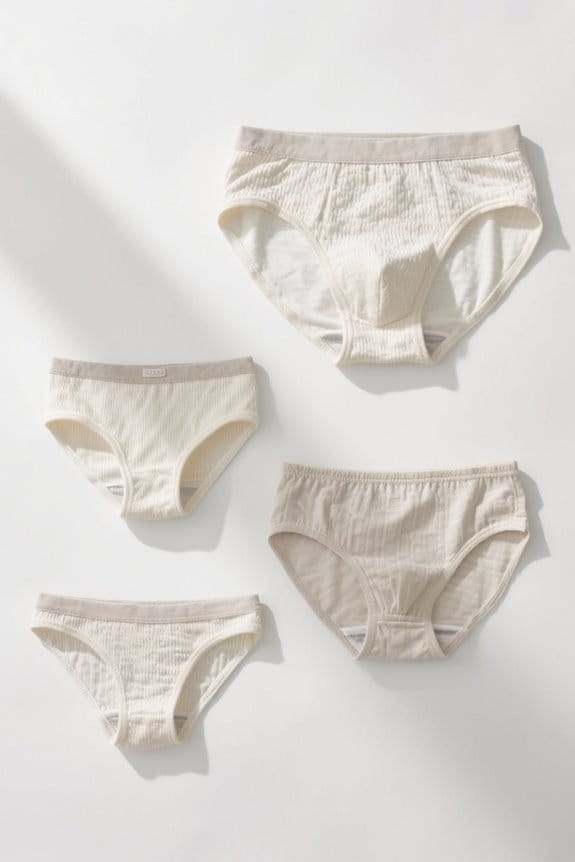
Functionality: no-show underwear is engineered to remain invisible beneath clothing, balancing cut, edge treatment, and material choices to prevent visible panty lines. An overview describes purpose, features, materials, fit, and use, giving practical guidance for selection and care.
Key points
- Purpose: eliminates visible lines, suits tight or thin fabrics, supports smooth silhouettes for formal and activewear.
- Materials: microfiber, nylon-spandex blends, breathable moisture-wicking fabrics, neutral shades to match skin tones.
- Fit and comfort: contouring cuts, silicone grips, zero-elastic options, adaptive fits reduce rolling and bunching.
- Design aesthetics: minimalist edges, bonded finishes, laser-cut details, examples clarify trade-offs in durability and feel.
- Consumer education: care instructions, sizing tips, and use-case examples reduce returns and improve satisfaction.
Recommendations include testing under target garments before wear, and following care. Many top options use blends like polyamide and elastane to provide stretch, softness, and reduced irritation while maintaining a seamless appearance.
Seamless Construction Methods

Seamless construction combines knitting, heat bonding, and material choices to make underwear that lies flat, reduces irritation, and fits consistently, which aids the user in choosing the right product and caring for it properly.
Methods Overview: Circular knitting machines produce tubular fabric without side seams, computer-controlled gauges guarantee consistent sizing, and heat sealing flattens joins for comfort.
Key components:
- Circular knitting: sizes adjusted without pattern changes, complex stitch patterns, automated tension control.
- Heat bonding: hot melt films, controlled temperatures, flat strong seams, reduces friction.
- Materials: elastic knit, moisture-wicking fibers, breathable mesh in targeted zones.
Benefits: seamless advantages include waste reduction, faster production, lower defect rates, and durable bonded joints from manufacturing innovations. Read care labels, follow gentle wash cycles, and avoid high heat drying machines. Many popular brands, including Calvin Klein, emphasize high-quality fabrics that enhance comfort and durability.
Laser-Cut Edges and Bonding Technology

Many manufacturers now use laser-cut edges and bonding technology to create no-show underwear that combines precise cutting, flat joins, and reliable stretch.
How it works: Laser systems offer precision cutting to 0.01 mm accuracy, sealing edges with CO2 beams to prevent fray and deformation. Bonding methods use heat sealing and PUR dispensing, creating flat, durable seams without thread.
Benefits: Flat bonded edges reduce visible lines, improve comfort, and maintain elasticity after washing. Faster cutting, nesting, and dual-head automation lower waste and costs, while digital templates enable complex patterns and perforation for ventilation.
Manufacturers can cut multiple layers at speeds up to 600 mm/s, boosting throughput, reducing lead times, and lowering defects, overall costs.
Care note: Garment instructions should be followed to preserve bonded edges and stretch.
Many of these garments also use polyamide and elastane blends for stretch and comfort.
Materials and Fabric Technologies
Materials and fabric choices determine fit, durability, and the ability to use bonding or laser-cut techniques in no-show underwear, so designers must match material properties to construction methods.
Common synthetics and blends: Nylon, polyester, spandex mixes give stretch, recovery, smoothness, they enable laser edges and minimal seams.
- Nylon-spandex: shaping, durability, good for bonding.
- Polyester-microfiber: durability, smooth finish, supports performance blends.
Natural fibers and limits: Cotton lacks stretch, needs stitching, blends mitigate shape loss.
Circular knitting and tech: Seamless knitting creates zones, mesh for breathability, reduces seams.
Eco options: Modal, bamboo, recycled yarns offer sustainable fabrics, they balance comfort and environmental goals.
Consequences: wrong material prevents bonding, causes fit failure and edge roll.
– Testing: prototypes reveal puckering, adhesive failure, or rapid wear. Material swaps recommended. Bamboo fabric is approximately 30% more breathable than cotton and wicks moisture effectively, making it a strong choice for no-show linings.
Moisture-Wicking and Antimicrobial Finishes
Combining moisture-wicking and antimicrobial finishes, no-show underwear is engineered to move sweat away from skin and suppress odor-causing microbes, using material selection and surface treatments to keep wearers dry and comfortable.
Function
– Uses hydrophobic fibers and capillary yarn structures, which spread and transport sweat to fabric surface for evaporation, enhancing moisture management and cooling.
Antimicrobial treatments
– Include silver or zinc ions and chemical finishes, which reduce bacterial growth and provide odor control, extending wear between washes.
Practical care
– Recommend cold wash, no fabric softeners, air dry, to preserve performance and treatment durability.
Design features
– Mesh zones and microfiber blends increase airflow, reduce saturation, lower friction and chafing, and help maintain freshness during activity.
Durability varies by product, check labels for longevity claims and care. Many mainstream underwear lines incorporate Cool Comfort or similar moisture-wicking technologies to improve breathability and moisture management.
Fit, Sizing, and Pattern Engineering
Fit is the primary factor that determines comfort and invisibility, so the wearer must match garment measurements to body shape precisely.
- Fit and Sizing Principles: Seamless designs use zones of compression and stretch to contour, reducing panty lines and friction. Use size charts tied to fabric blends, and remember sizing myths like “one size fits all.”
- Practical Fit Adjustments: Try recommended sizes, adjust waistband tension, and select blends with known stretch factors to avoid rolling or bunching.
- Pattern Engineering Notes: Engineers place knit-density panels and gussets to prevent camel toe, improve breathability, and provide support without seams. Test real measurements against manufacturer charts, consider ergonomic body-mapping options, and prioritize inclusive sizing for fuller figures. Follow care guidance to preserve fit, fabric performance, and lifespan.
Many no-show designs include a cotton gusset to enhance natural moisture control and comfort.
Circular Knitting and Automation
After establishing pattern engineering and fit priorities, production shifts to circular knitting machinery and automation to create seamless underwear efficiently and at scale.
Overview: The factory uses high-speed circular knitting machines with hundreds of needles, transforming yarn reels into continuous fabric, improving machine efficiency and lowering labor needs.
Yarn loading: Prepared yarn cones feed creels, yarn technology guarantees uniform diameter and strength, white yarns start knitting then dyeing follows.
Pattern control: Designers send pattern files to machines, software controls needle movement and feeders, this reduces waste.
Seamless tube method: Two panties knit as one tube, pre-formed shapes require minimal stitching, production speed increases.
Quality checks: Automated inspection finds defects immediately, faulty fabric is removed, this preserves downstream dye and finishing quality.
Operators typically run five to six machines regularly.
Many established brands integrate moisture-wicking technology into their final products to enhance comfort and performance.
Shapewear Integration and Leakproof Innovations
When integrating leakproof panels into shapewear, manufacturers must balance absorbency, compression, and seamless appearance to maintain protection without adding visible bulk or discomfort. Shapewear benefits and leakproof technology combine to offer smoothing, moisture control, and discreet protection in one garment. Key design elements include:
Design and Function
- Absorbency ranges from 0.8 to 3 teaspoons per garment, providing light to moderate protection without odor or wet feel.
- Leakproof layers pair with compression fabrics to retain shaping, and maintain a smooth silhouette under clothing.
- Customizable PerfectCut™ adjustments enable fit changes, leg length alterations, and back plunge modifications without compromising structure.
- Product choices include bodysuits, shaper shorts, and thigh savers, offering color and length options for varied needs.
Users gain all-in-one coverage, shaping, and discreet protection daily. Many consumers opt for high-waisted designs to combine support and comfort.
Comfort, Breathability, and Stretch Performance
Although engineered to be invisible under clothing, no-show underwear must simultaneously deliver comfort, airflow, and flexible support, or the wearer will experience chafing, bunching, or loss of protection. Comfort features: Circular knitting removes side seams, creating a skin-hugging fit that prevents edges from digging in, and elastic fibers hold shape without tight bands. Breathability: Seamless construction and moisture-wicking blends increase airflow, reduce sweat buildup, and limit odor and bacteria risks through strategic porosity. Stretch performance: High-stretch, multidirectional fabrics and laser-cut edges enable dynamic adaptability, conforming to movement without shifting or tearing. Ergonomic support: Design elements like Ball Hammock® pouches provide targeted anatomy support, reducing friction during prolonged wear and active use. Users should choose fabric blends and fits matched to activity level, skin sensitivity. Many absorbent underwear options are reusable designs, offering a sustainable alternative.
Durability, Care, and Longevity
Because seamless construction removes stitched seams, wearers must treat no-show underwear differently to preserve fit, elasticity, and appearance over time.
Durability overview
Seamless pieces can stretch, shrink, or tear without proper fabric quality, freecut fabrics and bonded edges reduce fraying but add cost.
Care and fabric maintenance
Gentle cycles or hand washing prevent stress, avoid bleach and harsh detergents to protect fibers and color.
Washing tips and drying
Use mild detergent, cold water, mesh bags, air dry or low heat to prevent elasticity loss and shrinking.
Inspection and repair
Check regularly for pilling, rolled edges, or weak spots, replace or repair early to avoid sudden failure.
Usage guidance
Reserve delicate seamless styles for low-impact wear, choose microfiber blends for longer color retention and durability.
Many brands pair seamless construction with laser-cut edges to eliminate visible lines under clothing.
Market Trends and Consumer Preferences
Why is demand for no-show and seamless underwear accelerating globally, and what should the reader track to stay informed about changes and choices? Market growth, consumer awareness, and fabric advances drive demand, and readers should monitor sales, materials, and regional trends.
Key market indicators
- Market size and CAGR, example: seamless market $46.7B (2023), track annual growth.
- Regional uptake, Asia-Pacific urbanization raises demand and styles.
Consumer preferences
- Comfort and inclusivity, no-size concepts appeal to body positivity, reduced returns.
- Fabric and design, microfiber, modal blends, laser-cut edges for invisible wear.
Distribution and marketing
- E-commerce impact, social media and marketing strategies shape visibility.
- Price versus premium trade-offs, watch purchasing patterns and sustainability signals.
- Track returns rates, customer reviews, and influencer-driven campaigns for clear buying signals.
Monitor price shifts and promotions.
Emerging Developments and Future Directions
Following market trends and consumer preferences, attention shifts to the technologies and pathways that will shape no-show and seamless underwear over the next decade, showing what stakeholders should watch and why.
Key materials and functions:
– Smart fabric developments include conductive materials, biosensors, temperature-regulating textiles, moisture-wicking and antibacterial finishes, examples include phase-change fibers and self-cleaning coatings.
Manufacturing and fit:
– 3D knitting, circular and WKS methods enable body-mapped compression, seamless edges via laser bonding, reducing waste and cutting costs.
Connectivity and services:
- smart underwear advancements predict wearable technology integration with IoT, AI-fit adjustments, hydration alerts, and virtual fitting, implications include privacy needs, software support, and regional market growth in Asia-Pacific.
- Sustainability incentives, biodegradable fibers, and reduced production waste increase long-term value for manufacturers and consumers globally.
Frequently Asked Questions
Are No-Show Underwear Biodegradable or Recyclable?
Like Persephone’s return, no-show underwear can be biodegradable and recyclable depending on fiber choice; garments made from biodegradable materials like organic cotton or hemp compost readily, while blends and synthetics complicate recycling processes and persist.
Do Dyes or Finishes Commonly Cause Skin Irritation or Allergic Reactions?
Yes, dyes and chemical finishes commonly cause skin irritation and allergic reactions; dye sensitivity is frequent with disperse and azo dyes, while finish impact (formaldehyde, glues, rubber accelerators) exacerbates contact dermatitis, especially in occluded areas.
How Can I Evaluate Fit Without Trying Underwear on In-Store?
Contrasting guesswork with measurement, they use waist and hip measurements, consult size charts, check fabric types for stretch, compare favorite garments’ labels and the finger waistband test, average multiple measures, and review brand-specific fit notes.
What Are Typical Price Ranges and Indicators of Good Value?
They note typical price ranges: budget $4–10, mid-range $10–20, premium $20+; price comparison highlights bulk savings; value indicators include high star ratings, seamless construction, materials, reinforced edges, customer reviews, promotions for added affordability and durability.
Are There Industry Labor and Supply-Chain Ethical Standards?
Examining whether standards alone guarantee fair outcomes, the answer is: industry labor and supply-chain ethical standards exist and include ethical sourcing and labor practices guidelines, certifications, audits, and legal regulations to enforce worker protections globally.